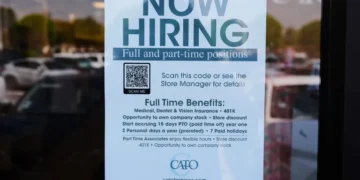
For many unemployed professionals, the modern job search has become a full-time occupation with diminishing returns. In response, a growing number of white-collar workers are embracing an unconventional strategy, paying recruiters to look for jobs on their behalf. The practice, known as reverse recruiting, reflects how challenging the current reverse recruiting job market has become for experienced professionals.
Reverse recruiting flips the traditional hiring model. Instead of recruiters being paid by employers to fill open roles, job seekers hire agencies or independent recruiters to manage applications, outreach, and follow-ups. According to reporting by The Wall Street Journal, some of these services charge monthly fees exceeding $1,000, while others take a percentage of a client’s first-year salary once a job is secured.
Why professionals are outsourcing their job searches
Reverse-recruiting firms market themselves as end-to-end job search managers. Beyond résumé edits and interview coaching, many take over the application process entirely, submitting dozens of applications each week on behalf of their clients. For professionals exhausted by months of rejection or silence, the appeal is efficiency.
The reverse recruiting job market is particularly active among mid-career professionals in fields like marketing, finance, consulting, and technology. These workers often have strong credentials but are struggling to stand out in a crowded applicant pool. Some clients say outsourcing allows them to focus on networking or skill-building, while others see it as a way to regain momentum after long periods of unemployment.
Still, the model raises concerns. Traditional recruiters interviewed by the Journal expressed discomfort with candidates sharing sensitive login credentials, such as LinkedIn or applicant tracking systems like Workday. Others question the ethics of charging job seekers directly, a practice historically discouraged in recruiting.
A job market that feels frozen
The rise of reverse recruiting is closely tied to broader labor market dynamics. Economists describe the current environment as “low hire, low fire,” a scenario in which companies are reluctant to lay off workers but equally hesitant to add new ones. This helps explain why unemployment rates appear relatively stable even as job searches drag on.
Federal data shows that job hunts now last an average of about six months. Last summer, the number of job seekers exceeded the number of open roles for the first time since 2021. Meanwhile, the US economy added fewer jobs last year than in any year since 2003, excluding recessions.
Several factors are contributing to the slowdown. Businesses have delayed hiring amid tariff uncertainty and rising operating costs. Others are still correcting for aggressive pandemic-era hiring. Some executives cite productivity gains from AI tools as a reason to slow workforce expansion, a point echoed publicly by leaders like Jensen Huang when discussing how automation reshapes labor needs.
Caution, cost, and credibility
Despite its growth, reverse recruiting remains controversial. Monthly fees can quickly add up, especially for workers already under financial strain. Critics also argue that no recruiter can bypass automated screening systems or guarantee results in a weak hiring market.
There is also a question of accountability. Unlike licensed career coaches or established staffing firms, many reverse-recruiting startups operate with limited oversight. Job seekers are advised to scrutinize contracts carefully and understand whether fees are refundable or contingent on success.
Yet demand continues to rise, suggesting many professionals see few alternatives. A recent survey by the Federal Reserve found that fewer than half of workers believe they could find a new job within three months. That pessimism encourages employees to stay put, which further suppresses job openings and perpetuates the hiring slowdown.
What it signals about the future of work
Reverse recruiting is less a trend than a signal. It highlights a labor market where effort alone no longer feels sufficient and where even highly skilled professionals feel compelled to pay for an edge. Whether the model endures will depend on how quickly hiring rebounds and whether regulators or industry groups step in with clearer standards.
For now, the reverse recruiting job market reflects a broader reality. Finding a white-collar job in today’s economy increasingly requires time, money, and patience, and for some, outsourcing the search has become a calculated, if costly, bet.