A Labor Market That Is ‘Open’, Yet Not Hiring
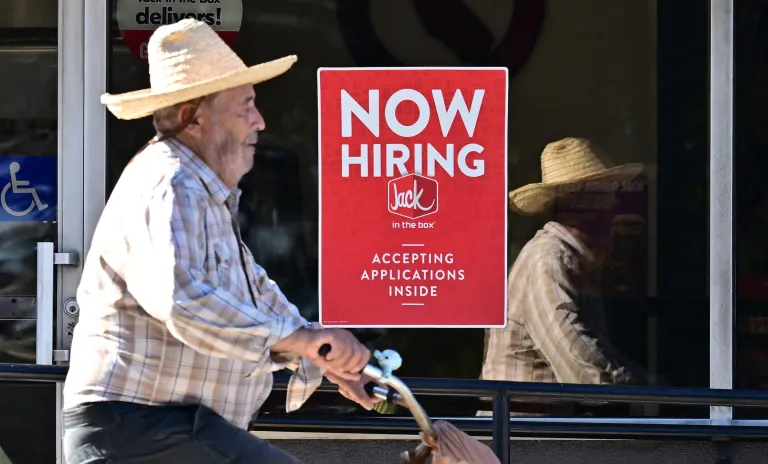
The US hiring rate falls to pandemic-era levels, signaling a sharp slowdown in labor market activity despite relatively stable unemployment. New data from the Bureau of Labor Statistics shows hiring dropped to 3.1 percent in February, with 4.8 million hires recorded, the weakest level since April 2020 when large parts of the economy were shut down.
Unlike the pandemic period, however, businesses today remain open and unemployment is holding near 4 percent. This contrast has raised concern among economists, who see a labor market that appears stable on the surface but lacks underlying momentum.
Heather Long, chief economist at Navy Federal Credit Union, described the situation as unusually constrained. She noted that hiring activity has slowed to levels comparable to a period when economic activity was forcibly paused, underscoring how cautious employers have become.
A ‘Locked-Out’ Workforce and Slowing Mobility
Why are workers not moving, and why are companies not hiring? Economists increasingly point to a breakdown in normal labor market flows.
Nicole Bachaud, a labor economist at ZipRecruiter, characterized the current environment as a “locked-out market” for job seekers. Hiring has slowed, while retirements have also been delayed, limiting opportunities for new entrants and reducing turnover across industries.
The quits rate remained subdued at 1.9 percent, while layoffs held steady at 1.1 percent. This combination suggests workers are reluctant to leave existing roles, while employers are equally hesitant to expand headcount.
Additional factors are also contributing to the slowdown. Severe winter weather disrupted hiring in sectors such as construction and hospitality, industries that typically absorb displaced workers quickly. At the same time, reduced immigration has limited labor market dynamism, slowing the natural cycle of job switching and hiring.
Early Warning Signs in Key Industries
One of the more concerning signals in the latest data is where hiring has weakened most. Construction and hospitality, often considered entry points for workers between jobs, saw notable declines.
This trend suggests the slowdown may not be limited to cyclical or high-skill sectors, but is spreading into areas that typically remain resilient. Economists warn this could indicate broader demand softness rather than temporary disruption.
Skanda Amarnath, executive director of Employ America, estimates that temporary factors such as weather and labor disruptions account for roughly half of the decline. The remaining slowdown, he argues, reflects more fundamental economic shifts.
For workers, this creates a challenging environment. Job losses are not surging, but opportunities to re-enter the workforce or switch roles are becoming increasingly scarce.
Energy Shock and the Risk of Layoffs
Looking ahead, economists are closely monitoring how geopolitical tensions could affect hiring trends. The recent escalation involving Iran has pushed global energy prices higher, with Brent crude exceeding $115 per barrel and key shipping routes disrupted.
Higher energy costs could ripple across transportation, manufacturing, and retail sectors, further reducing hiring appetite. Consumer spending may also come under pressure, adding another layer of risk to an already fragile labor market.
Long warned that companies may soon shift from hiring freezes to cost-cutting measures. If margins tighten further, businesses could begin reducing headcount to maintain financial stability.
This potential shift would mark a turning point. The current equilibrium, characterized by low hiring and low layoffs, could give way to a more traditional downturn marked by rising unemployment.
The Federal Reserve’s Growing Dilemma
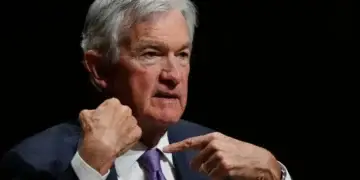
The latest labor data also complicates the outlook for monetary policy. Inflation remains above the Federal Reserve’s target, even as hiring slows, creating a potential stagflation scenario.
Policymakers now face a delicate balance. Tightening policy further could suppress hiring even more, while easing too soon risks prolonging inflationary pressures.
The upcoming jobs report will be closely scrutinized for confirmation of broader trends. While economists caution against drawing direct conclusions from a single dataset, the direction of travel is becoming harder to ignore.
If hiring continues to weaken, it may signal that demand across the economy is softening, a development that could reshape expectations for growth in the months ahead.