MILLIONAIRE
  • Home
  • BUSINESS
  • ECONOMY
  • FINANCE
  • LIFESTYLE
  • MILLIONAIRE STORY
  • REAL ESTATE
  • TRAVEL
No Result
View All Result
MILLIONAIRE
  • Home
  • BUSINESS
  • ECONOMY
  • FINANCE
  • LIFESTYLE
  • MILLIONAIRE STORY
  • REAL ESTATE
  • TRAVEL
No Result
View All Result
MILLIONAIRE
No Result
View All Result
Home ECONOMY

America’s $952 Billion Debt Interest Burden Is Closing In on Medicare

January 16, 2026
in ECONOMY
America’s $952 Billion Debt Interest Burden Is Closing In on Medicare

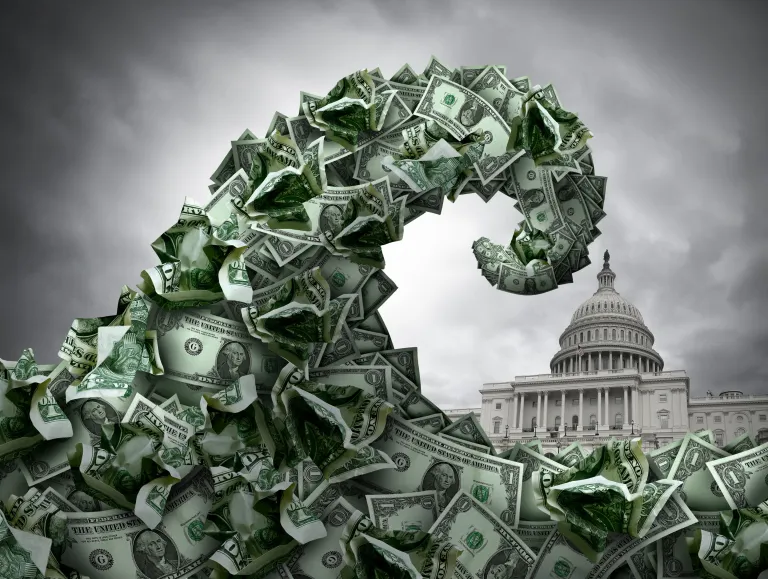
For years, America’s expanding deficits and mounting debt felt like an abstract concern, troubling economists more than voters. That has changed. Rising U.S. debt interest costs are now becoming one of the most visible and unsettling pressures on the federal budget, and their pace is accelerating faster than policymakers anticipated.

You might also like

Mohamed El-Erian Warns Iran War Could Trigger Global Stagflation Risk

Top Economist Warns Companies Are Approaching an AI Cortés Moment

US National Debt Interest Nears $1 Trillion, Surpassing Defense and Medicaid Spending

Public concern is already high. A 2025 survey by the nonpartisan Peter G. Peterson Foundation found that more than three-quarters of voters believe addressing federal borrowing should be a top priority for Congress and the White House. That anxiety has only intensified as interest payments, once a secondary budget item, move rapidly toward the center of fiscal debates.

From Background Expense to Budget Heavyweight

In fiscal year 2019, net interest on the national debt totaled $375 billion, about 1.7 percent of gross domestic product. By fiscal year 2025, which ended in September, that figure had surged to $952 billion. The increase of more than 150 percent far outpaced growth in major programs such as Medicare, Medicaid, and defense.

Interest now ranks as the federal government’s third-largest expense, trailing only Social Security and Medicare. It nearly matched Medicare spending in 2025 and consumed 3.2 percent of national income, almost double its pre-pandemic share. Put differently, interest payments have risen from less than one dollar out of every ten federal spending dollars to roughly one out of every six and a half.

The trend is intensifying. During the first quarter of fiscal year 2026, interest costs reached $179 billion, exceeding Medicare and defense spending for that period and ranking second only to Social Security.

Why Interest Is Rising So Fast

The surge in U.S. debt interest costs stems from a widening primary deficit, the gap between government revenues and spending before interest is counted. As that deficit grows, the Treasury must borrow more, increasing the total debt on which interest is owed.

Higher borrowing costs compound the problem. Since 2019, the average interest rate on federal debt has climbed from roughly 2.5 percent to about 3.35 percent. While the government has leaned heavily on short-term borrowing to keep rates down, refinancing that debt into longer-term bonds would likely increase interest expenses further.

Over the past six years, total federal deficits expanded from just under $1 trillion to $1.8 trillion. Interest alone added more than $570 billion to that increase, accounting for roughly 70 percent of the deterioration.

A Growing Threat to Long-Term Priorities

According to projections from the Congressional Budget Office, interest payments will continue to consume a larger share of national income, reaching about 4 percent by 2034. At that point, annual interest costs could approach $1.6 trillion, narrowly surpassing Medicare to become the second-largest federal expense.

That would mean roughly one in every four dollars collected from individual income taxes would go toward servicing existing debt rather than funding programs or investments. Even higher tariff revenues introduced under President Donald Trump have failed to offset the growth. In 2025, increased tariff income was largely absorbed by rising interest costs within the same year.

The Political Reckoning Ahead

Interest payments provide no direct public services, yet they increasingly crowd out spending on healthcare, defense, and future benefits. The expanding burden reflects decades of spending choices and revenue decisions that are now colliding with higher rates and larger debt loads.

If voters are searching for a tangible sign of fiscal imbalance, interest costs may be it. Once a technical line item, they are quickly becoming one of the most powerful symbols of the nation’s long-term budget challenge.


Share30Tweet19

Recommended For You

Mohamed El-Erian Warns Iran War Could Trigger Global Stagflation Risk

by Zoe
March 4, 2026
0
Mohamed El-Erian Warns Iran War Could Trigger Global Stagflation Risk

A fragile global economy faces another shock Leading economist Mohamed El-Erian has warned that the ongoing conflict involving Iran could push the global economy toward stagflation if the...

Read moreDetails

Top Economist Warns Companies Are Approaching an AI Cortés Moment

by Zoe
March 4, 2026
0
Top Economist Warns Companies Are Approaching an AI Cortés Moment

A Point of No Return for Corporate AI Strategy American companies may be approaching what one leading economist calls an AI Cortés moment, a decisive turning point in...

Read moreDetails

US National Debt Interest Nears $1 Trillion, Surpassing Defense and Medicaid Spending

by Zoe
March 3, 2026
0
US National Debt Interest Nears $1 Trillion, Surpassing Defense and Medicaid Spending

The cost of servicing the US national debt interest has climbed to nearly $970 billion annually, underscoring a sharp fiscal shift that has accelerated since 2020. According to...

Read moreDetails

Baby Boomers Keeping the U.S. Economy Out of Recession, For Now

by Zoe
March 2, 2026
0
Baby Boomers Keeping the U.S. Economy Out of Recession, For Now

The narrative around demographic decline often centers on long-term risks, slower growth, rising entitlement costs, and a shrinking workforce. Yet in 2026, baby boomers are playing a different...

Read moreDetails

Ray Dalio, Scott Bessent Back Bipartisan 3% Solution to Rein In U.S. Deficit

by Zoe
March 2, 2026
0
Ray Dalio, Scott Bessent Back Bipartisan 3% Solution to Rein In U.S. Deficit

A growing coalition of lawmakers, investors and policy leaders is rallying behind what supporters call a bipartisan 3% solution, a proposal aimed at reducing the federal deficit to...

Read moreDetails

Leave a Reply Cancel reply

Your email address will not be published. Required fields are marked *

Browse by Category

  • AI
  • BUSINESS
  • ECONOMY
  • FINANCE
  • LIFESTYLE
  • MILLIONAIRE STORY
  • REAL ESTATE
  • TRAVEL

Recent Posts

  • Strava IPO Plans Take Shape as Gen Z Run Clubs Fuel Social Fitness Boom
  • Mohamed El-Erian Warns Iran War Could Trigger Global Stagflation Risk
  • Top Economist Warns Companies Are Approaching an AI Cortés Moment
  • Larry Puckett, Theon Global and the Power of Experience: Why Wisdom, Not Age, Is the Ultimate Growth Advantage
  • PR Power and the Millionaire Effect: How Strategic Publicity Is Creating Modern Business Success Stories

Recent Comments

No comments to show.

Archives

  • March 2026
  • February 2026
  • January 2026
  • December 2025
  • November 2025
  • October 2025
  • September 2025
  • August 2025
  • July 2025
  • June 2025
  • May 2025
  • April 2025
  • March 2025
  • February 2025
  • June 2024

Categories

  • AI
  • BUSINESS
  • ECONOMY
  • FINANCE
  • LIFESTYLE
  • MILLIONAIRE STORY
  • REAL ESTATE
  • TRAVEL

CATEGORIES

  • AI
  • BUSINESS
  • ECONOMY
  • FINANCE
  • LIFESTYLE
  • MILLIONAIRE STORY
  • REAL ESTATE
  • TRAVEL

About Millionaire MNL News

  • About Millionaire MNL News

© 2025 Millionaire MNL News

No Result
View All Result
  • HOME
  • BUSINESS
  • ECONOMY
  • FINANCE
  • LIFESTYLE
  • MILLIONAIRE STORY
  • REAL ESTATE
  • TRAVEL

© 2025 Millionaire MNL News

Are you sure want to unlock this post?
Unlock left : 0
Are you sure want to cancel subscription?