From Daily Ritual to Budget Line Item
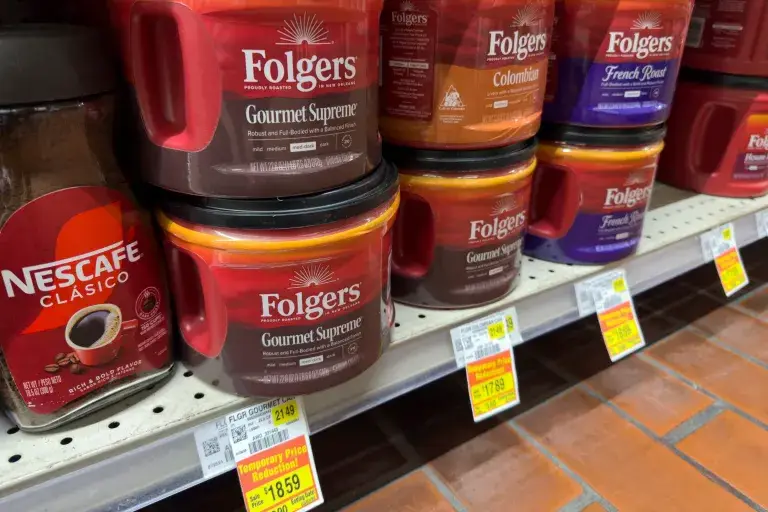
The US coffee price surge is reshaping how Americans start their mornings. For decades, coffee has been a near-automatic purchase, whether at a drive-through window or a neighborhood café. Now, with prices rising sharply, many consumers are reassessing what was once a small daily indulgence.
Government data show coffee prices in January were up 18.3% from a year earlier. Over the past five years, prices have climbed 47%, according to the Consumer Price Index. The US coffee price surge has outpaced general inflation in several periods, turning a routine expense into a noticeable strain on household budgets.
For Chandra Donelson, a 35-year-old data and artificial intelligence strategist based in Washington, D.C., coffee was a fixture of daily life. Her routine evolved from sugary fast-food cups to customized café drinks. But after a government shutdown interrupted her paychecks last fall, she eliminated her café visits entirely.
Instead, she now opts for a Republic of Tea blend at home, sweetened with honey. The shift reduced her cost per cup from several dollars to just cents, a calculation she describes as unavoidable given broader financial pressures.
Café Visits Decline as Home Brewing Gains Ground
Others are making similar adjustments. Liz Sweeney, 50, of Boise, Idaho, once drank multiple cups daily and stopped at cafés whenever she left home. As prices climbed last year, she cut back to a single cup brewed at home and replaced additional caffeine with Diet Coke or a quick stop at McDonald’s for a soda.
Dan DeBaun, 34, of Minnetonka, Minnesota, has also trimmed café spending. As he and his wife save for a home purchase, he now buys ground coffee at Trader Joe’s and fills a travel mug before work. What once felt like a modest expense, he says, now registers as a meaningful budget line item.
Industry data confirm the price shift. Toast, a restaurant payment platform serving more than 150,000 establishments, reported that the median price of a regular hot coffee reached $3.61 in December. Cold brew prices were even higher, with a median of $5.55, though prices vary widely by city and region.
Despite the increase, overall consumption appears resilient. The National Coffee Association reports that roughly two-thirds of Americans drink coffee daily, and its surveys suggest consumption has remained broadly steady even as prices rise. For many, coffee remains nonnegotiable, even if the format changes.
Climate, Imports, and Global Supply Pressures
Behind the US coffee price surge are global supply dynamics. Virtually all coffee consumed in the United States is imported, leaving domestic consumers exposed to international market volatility.
Climate conditions have played a central role. Drought in Vietnam, heavy rainfall in Indonesia, and prolonged heat and dryness in Brazil have reduced yields in key coffee-producing regions. Lower output has tightened global supply and pushed wholesale prices higher.
Although tariffs briefly affected certain coffee imports in 2025, they were ultimately removed. Analysts say the more persistent driver has been weather-related disruption, which can take multiple harvest cycles to normalize.
These pressures ripple through the supply chain, from importers to roasters to cafés, and eventually to consumers. For small businesses operating on tight margins, passing on at least part of the increase has become unavoidable.
Trading Experience for Efficiency
For some consumers, the shift is not only financial but social. Sharon Cooksey, 55, of Greensboro, North Carolina, once visited Starbucks most weekday mornings for a caramel latte. She first switched to brewing Starbucks-branded coffee at home, then opted for Lavazza after noticing it was significantly cheaper.
A bag of beans that lasts several weeks now costs her roughly the same as a single specialty drink at a café. While she misses the familiarity of baristas greeting her by name, she has found that she prefers the taste of her home-brewed coffee.
The adjustment highlights a broader consumer recalibration. As costs rise across categories, from housing to groceries, even habitual purchases face scrutiny. What was once a seamless daily ritual now requires a calculation.
The US coffee price surge may not eliminate Americans’ appetite for caffeine, but it is redefining where and how they consume it. For many households, brewing at home has shifted from convenience to necessity, signaling how incremental price increases can gradually alter entrenched consumer behavior.