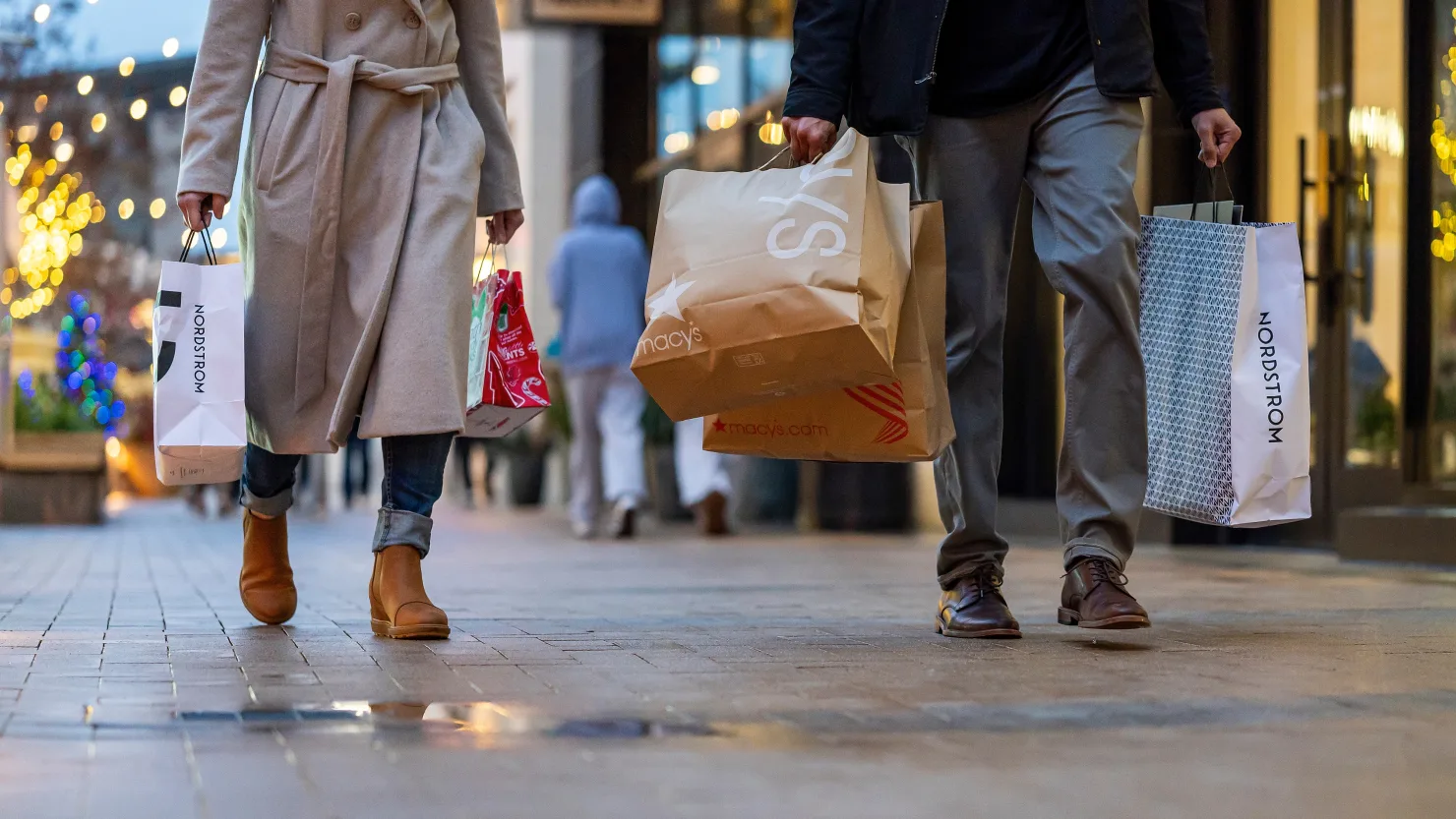
Shoppers May Feel the Trade Squeeze
Just as U.S. consumers gear up for the holiday shopping season, economists warn tariffs are about to make their presence felt in everyday prices. After months of limited pass-through, retailers are running out of ways to absorb rising import costs, meaning higher price tags could soon appear on shelves.
“Tariffs take time to filter through the system,” said Dana Peterson, chief economist at The Conference Board. “But as inventories built before the tariffs are sold off, we’ll begin seeing more visible inflation in consumer goods, especially discretionary categories.”
The warning comes as President Trump’s new round of trade measures, including expanded tariffs on Chinese electronics, apparel, and home goods, officially took effect this quarter.
A Slow Burn Now Reaching the Checkout Counter
Retailers initially buffered customers from the impact of tariffs by cutting margins, renegotiating supplier contracts, and shifting sourcing. But with costs now rising across global supply chains, those cushions are thinning.
According to new data from Oxford Economics, the average import price on consumer goods from China has risen 7% since summer, and some retailers report wholesale costs are up as much as 15% in key categories like small appliances and apparel.
“We’re entering the point where retailers have to make hard choices,” said Ellen Zentner, chief U.S. economist at Morgan Stanley. “They can’t keep eating those costs indefinitely, and the holidays are when they have pricing power.”
Electronics, Apparel, and Toys Among Hardest Hit
The categories most vulnerable to price increases are those that rely heavily on Asian manufacturing:
-
Electronics and gadgets, including headphones, tablets, and gaming consoles.
-
Apparel and footwear, particularly fast-fashion imports.
-
Toys and seasonal décor, where margins are already thin and supply chains are rigid.
Retail analysts say even small changes, an extra $3 or $5 on an item, can compound quickly during the holidays. “Consumers may not notice at first, but a 2–3% increase across hundreds of products can add up,” said Neil Saunders, managing director at GlobalData Retail.
Big-box retailers like Walmart and Target are expected to strategically absorb some increases on essential goods to keep traffic high, while luxury and specialty retailers will likely pass on most of the cost.
Consumers Already Feeling the Strain
U.S. households are entering the season with less financial flexibility. Credit card balances have reached a record $1.14 trillion, according to the Federal Reserve, and delinquencies are rising fastest among borrowers under 35.
That dynamic makes the timing of new price pressures particularly delicate. “It’s a perfect storm,” said Peterson. “You’ve got tariffs pushing up prices, debt levels at all-time highs, and wage growth that’s starting to cool.”
A Bankrate survey found 62% of Americans plan to spend less this holiday season, citing inflation fatigue and uncertainty about the economy.
Retailers Balance Price With Perception
Despite cost pressures, retailers are wary of alienating price-sensitive shoppers. Many are expected to use discounting and “shrinkflation” tactics, offering slightly smaller products or cheaper packaging to disguise higher prices.
At the same time, analysts say companies will rely on promotional pricing events such as early Black Friday deals and members-only sales to manage the optics.
“Consumers are deal-driven right now,” said Sucharita Kodali, retail analyst at Forrester. “Brands will use discounts to maintain the illusion of value, even if base prices quietly rise.”
Broader Economic Ripple Effects
The return of tariff-linked inflation could complicate the Federal Reserve’s soft-landing strategy. Recent CPI data shows core inflation moderating, but the re-emergence of goods inflation could stall that progress.
“If tariffs pass through to consumer prices faster than expected, the Fed’s timeline for rate cuts could get delayed,” said Zentner. “Policymakers will want to see if this is a temporary spike or a sustained trend.”
Meanwhile, supply chains are again showing signs of tension. Freight rates from Asia to the U.S. West Coast have risen nearly 20% since September, according to Xeneta data, suggesting importers are racing to secure shipments before costs rise further.
What It Means for Holiday Spending
Analysts predict total U.S. holiday sales will grow between 3–4% this year, down from 5.4% in 2023 – still positive, but slower. The biggest impact will likely be felt in mid-range consumer segments where inflation and higher borrowing costs collide.
“Luxury shoppers are insulated; low-income households have already cut back,” said Saunders. “It’s the middle that’s being squeezed, the average family that still wants to make the holidays feel special.”
Online retailers may benefit slightly, using automation and leaner logistics to offset costs, but overall sentiment remains cautious.
The Bottom Line
The holiday season could test whether consumers, already stretched, will tolerate tariff-driven price increases or pull back on spending.
While the full impact may take months to play out, one thing is clear: tariffs are no longer an abstract policy debate. They’re about to show up in shopping carts.
As Peterson put it, “For the first time in this trade cycle, tariffs won’t just hit corporate margins, they’ll hit stockings under the tree.”