A Changing Landscape for Property Titans
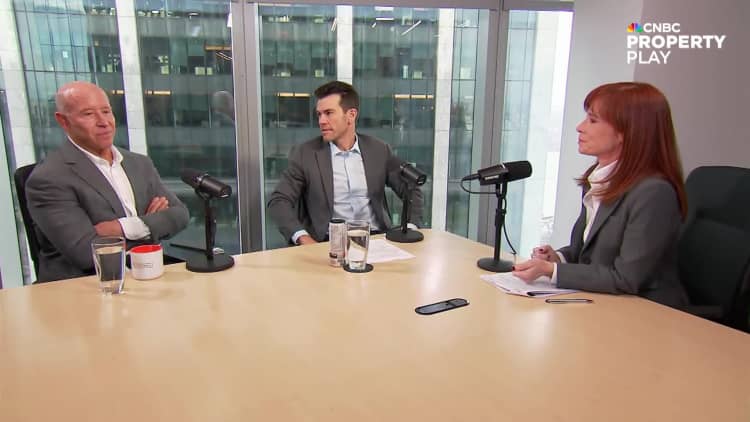
Two of America’s most influential real estate investors, Barry Sternlicht and Scott Wallace, are quietly reshaping their portfolios as rising interest rates, tight credit, and shifting work trends redefine the market.
Both men—known for their long-term instincts and contrarian timing, are moving out of traditional office assets and into luxury rentals, branded residences, and resort developments that cater to lifestyle-driven demand rather than corporate tenants.
“The next decade in real estate belongs to experience, not square footage,” said Sternlicht, founder and CEO of Starwood Capital Group, during a recent investor forum. “It’s about creating destinations where people actually want to live, work, and stay.”
Barry Sternlicht: Betting on Branded Living and Sunbelt Growth
For Sternlicht, the shift represents both a return to form and a new chapter. The billionaire behind 1 Hotels, Treehouse Hotels, and Starwood Property Trust has been steadily expanding into branded residences and hospitality-style multifamily developments in markets such as Miami, Austin, and Scottsdale.
According to filings and investor presentations, Starwood Capital has allocated more than $8 billion over the past 18 months toward mixed-use residential and resort projects, many tied to the 1 Hotels brand.
“We’re blending hotel-quality service with residential permanence,” Sternlicht said. “That hybrid model will define urban living over the next 10 years.”
He’s also doubling down on Sunbelt states, where population inflows and business migration continue to drive demand. Miami remains his centerpiece: Starwood recently unveiled plans for a $2.5 billion waterfront mixed-use project combining branded residences, retail, and a luxury hotel.
“The Northeast is overbuilt and overpriced,” Sternlicht told Bloomberg earlier this year. “The Sunbelt has demographic tailwinds that are impossible to ignore.”
Scott Wallace: Quietly Building a Luxury Rental Empire
While Sternlicht leans into brand power and hospitality integration, Scott Wallace, founder of Wallace Capital Partners, is taking a quieter, yield-focused approach.
Wallace has been buying up undervalued luxury rental portfolios in secondary U.S. cities – particularly Nashville, Charlotte, and Denver – where younger professionals are priced out of homeownership but willing to pay a premium for high-end living.
“High-income renters are the new middle class,” Wallace said at a recent private roundtable. “They want concierge service, flexible leases, and amenities that feel like a resort, not an apartment complex.”
Wallace Capital recently completed a $1.1 billion acquisition of three Class A multifamily portfolios through a joint venture with institutional partners. The firm plans to integrate technology-enabled leasing platforms and sustainability upgrades to boost asset values.
“We’re in a ‘rentership’ economy,” Wallace noted. “And in that economy, the best product wins.”
Why the Office Market No Longer Fits
Both Sternlicht and Wallace have made it clear that traditional office real estate is structurally broken.
“Work-from-home didn’t kill offices,” Sternlicht said. “Bad offices did.”
Still, even “good” offices are struggling to compete with flexible work trends. Vacancy rates in major U.S. metros remain above 19%, according to CBRE, while refinancing risk looms over billions in commercial loans.
Rather than chase recovery, both investors have redeployed capital into assets with recurring demand, such as residential, resort, and hospitality hybrids that benefit from stable occupancy and inflation-linked rents.
“Office used to be the backbone of commercial real estate portfolios,” Wallace said. “Now it’s the liability everyone’s trying to hedge.”
A Global View: From Europe to the Middle East
Starwood and Wallace Capital are also extending their reach beyond U.S. borders. Sternlicht recently announced a strategic expansion into the Middle East, partnering with regional developers to bring 1 Hotels to Dubai, Doha, and Riyadh.
Meanwhile, Wallace Capital has entered southern Europe, quietly acquiring distressed hospitality assets in Portugal and Spain for redevelopment. “Tourism assets in Europe are trading at a discount to replacement cost,” Wallace said. “We’re buying quality at recession prices.”
The New Luxury Thesis
What unites both billionaires’ strategies is a conviction that luxury and lifestyle real estate remain the most resilient sectors, driven by long-term demographic and cultural shifts.
Sternlicht calls it “experiential living,” while Wallace describes it as “income-backed luxury”, real estate that captures both emotional appeal and predictable cash flow.
“We’ve entered an era where real estate is no longer just about ownership,” Sternlicht said. “It’s about belonging.”
The Bottom Line
As the real estate cycle resets, Barry Sternlicht and Scott Wallace are doing what they’ve always done best: staying ahead of the crowd.
Their playbook for the next phase of the market centers on lifestyle, location, and liquidity, not cubicles or corporate tenants.
For the world’s top real estate minds, the property game hasn’t ended, it’s just moved to a new address.