A decades-old system under pressure
The global financial system has long been anchored by petrodollar dominance, a framework that ties oil trade to the U.S. dollar. However, escalating conflict involving Iran is raising fresh questions about whether that system could begin to fracture.
Analysts at Deutsche Bank note that the petrodollar structure dates back to a 1974 agreement between the United States and Saudi Arabia. Under that arrangement, oil exports were priced in dollars, with surplus revenues reinvested into U.S. assets. This created a reinforcing cycle, as countries needed dollars to purchase energy, strengthening the currency’s role in global trade and reserves.
Because oil remains a foundational input across industries, from manufacturing to transport and petrochemicals, the dollar’s centrality has extended far beyond energy markets. The result is a global system where trade, savings, and financial flows are deeply interconnected through the U.S. currency.
Security guarantees and the cost of influence
“What happens when the security umbrella weakens?”
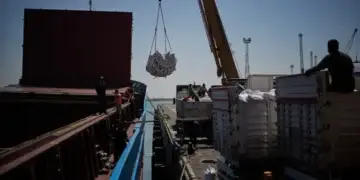
The durability of petrodollar dominance has relied not only on economic logic but also on geopolitical commitments. In exchange for pricing oil in dollars, Gulf states have historically benefited from U.S. military protection and maritime security, particularly in critical chokepoints like the Strait of Hormuz.
This arrangement was clearly demonstrated during the 1990 Gulf War, when U.S.-led forces intervened to stabilize the region and secure oil flows after Iraq’s invasion of Kuwait.
Today, that security framework appears less certain. While U.S. and allied forces have significantly weakened Iran’s military capabilities, Tehran retains the ability to disrupt shipping routes and energy infrastructure. Reports suggest that access through the Strait of Hormuz could increasingly become conditional, potentially involving transactions in alternative currencies such as the Chinese yuan.
At the same time, recent attacks have exposed vulnerabilities in regional defense systems, with damage reported to energy facilities and military assets. These developments are prompting questions about the long-term reliability of U.S. security guarantees in the region.
The slow emergence of the petroyuan
“Could oil begin trading beyond the dollar?”
Even before the current conflict, signs of strain in petrodollar dominance had begun to emerge. Sanctions on oil exports from countries such as Russia and Iran have already led to the use of alternative currencies in certain transactions.
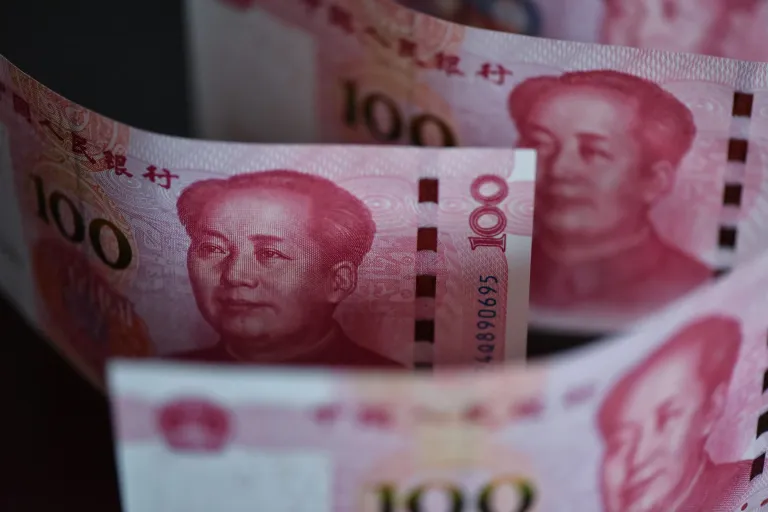
China has also taken steps to internationalize the yuan, including initiatives like cross-border digital currency platforms that aim to reduce reliance on dollar-based payment systems. Saudi Arabia’s participation in such projects signals a gradual diversification of financial partnerships.
In this context, the idea of a “petroyuan” is gaining attention. If oil producers begin accepting yuan for shipments, particularly under geopolitical pressure or logistical constraints, it could mark a significant shift in global trade dynamics.
Analysts caution that such a transition would likely be gradual rather than immediate. However, the current conflict may serve as a catalyst by exposing vulnerabilities in the existing system and encouraging experimentation with alternative settlement mechanisms.
Energy transition adds a second layer of disruption
“Is oil itself losing its central role?”
Beyond currency competition, a more structural challenge is emerging. High energy prices and supply disruptions are accelerating efforts by many countries to diversify away from oil and gas altogether.
Across Asia and Europe, governments are investing in alternative energy sources, including renewables, nuclear power, and even coal in the short term. At the same time, demand for electric vehicles is rising, further reducing long-term dependence on fossil fuels.
This shift has implications that extend beyond energy markets. If oil becomes less central to the global economy, the financial system built around it, including petrodollar dominance, could weaken accordingly.
Deutsche Bank analysts note that a world with more localized energy production and diversified supply chains may also require fewer dollar reserves. Such a transition would reshape not only trade flows but also global capital markets, including demand for U.S. government debt.
A resilient dollar, but rising long-term risks
Despite these challenges, the U.S. dollar remains firmly entrenched as the world’s primary reserve currency. In fact, during periods of geopolitical uncertainty, including the current Iran conflict, the dollar has often strengthened as investors seek safe-haven assets.
Historically, predictions of the dollar’s decline have repeatedly proven premature. The depth of U.S. financial markets, institutional stability, and global trust continue to underpin its dominance.
However, the combination of geopolitical shifts, technological innovation in payments, and structural changes in energy consumption introduces new variables. While no immediate displacement is expected, the foundations of petrodollar dominance may be gradually evolving.
The Iran conflict, in this context, could be remembered not as a decisive turning point, but as a moment that accelerated an already unfolding transformation in global finance.