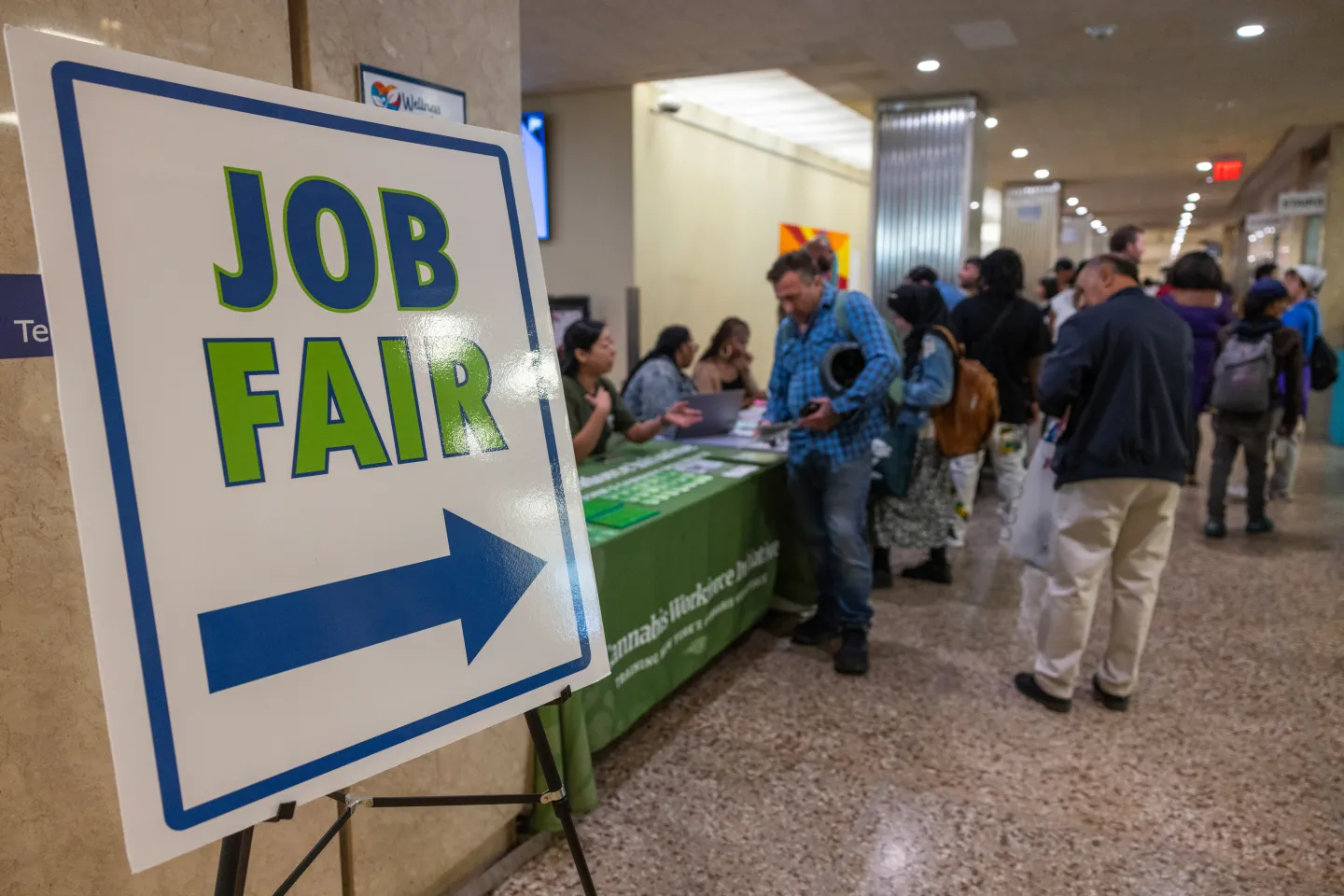
A Turning Point for the Labor Market
Corporate America’s hiring spree has officially reversed. According to a leading economist, the U.S. has entered a “low-hire, more-fire” economy, where companies are trimming staff faster than they replace them, and the pandemic-era strategy of hoarding talent “just in case” is coming to an abrupt end.
“This is the natural hangover after years of over-hiring,” said Nela Richardson, chief economist at ADP. “Businesses that once kept workers out of fear they couldn’t rehire them are now realizing that labor supply has normalized. They’re letting people go without hesitation.”
From Hoarding to Shedding
During the pandemic and immediate recovery period, employers struggled to find workers amid record turnover. Many chose to retain employees even when demand softened, leading economists to dub the trend “talent hoarding.”
But in 2025, that mindset is fading fast.
Data from the Bureau of Labor Statistics (BLS) shows that the U.S. hiring rate has fallen to its lowest level since 2014, while layoffs have climbed 22% year-over-year.
“We’re seeing a complete shift in employer behavior,” said Richardson. “Instead of fighting to retain, they’re optimizing for efficiency.”
Sectors once desperate for labor – such as tech, finance, and logistics, are now prioritizing profit margins and productivity metrics over headcount expansion.
The New Labor Reality
Economists say this is not a temporary adjustment but a new phase in the business cycle, driven by structural shifts in technology, AI adoption, and cost discipline.
According to Apollo Global Management, more than 60% of Fortune 500 companies have integrated some form of AI-driven workflow automation since 2023, allowing them to scale output with fewer employees.
“The corporate playbook has changed,” said Torsten Slok, Apollo’s chief economist. “The focus is no longer on maximizing talent, it’s on minimizing cost per output.”
This dynamic, Slok added, is accelerating labor market bifurcation, where highly skilled workers in technology and analytics remain in demand, while general office roles, mid-level management, and administrative jobs continue to disappear.
A Tale of Two Workers
The result is a workforce increasingly divided between those who leverage technology and those replaced by it.
“High-skilled employees are seeing raises and long-term security,” said Richardson. “But middle-skill and entry-level roles are facing more churn and shorter tenures than ever.”
ADP data shows that wage growth for senior data, AI, and engineering roles is still running at 7% annually, while clerical and customer support roles have seen increases of less than 1.5%, barely keeping up with inflation.
“Companies aren’t just slowing hiring,” Richardson noted. “They’re rethinking who they hire, and why.”
Layoffs Rising, Job Openings Shrinking
The shift has been visible in quarterly corporate reports. Major firms like Google, Citigroup, and Amazon have announced job reductions in non-core departments, even as profits rise.
Meanwhile, the ratio of job openings to unemployed workers, once a sign of a strong labor market, has fallen from 1.9 to 1.2, signaling a sharp cooling.
“Companies aren’t panicking like they were in 2021,” said Andrew Challenger of Challenger, Gray & Christmas. “They’re managing headcount strategically instead of emotionally.”
The End of the ‘Just-in-Case’ Workforce
The “low-hire, more-fire” trend also reflects growing caution around future economic uncertainty. Despite resilient GDP growth, many executives expect slower consumer spending and margin compression heading into 2026.
“Businesses are no longer keeping extra staff as insurance,” Slok said. “They’re betting on lean teams, AI-driven productivity, and outsourcing to weather whatever comes next.”
Recruiting agencies report a surge in short-term contracts and project-based employment, particularly in tech and marketing. That flexibility, experts say, gives employers room to scale without long-term obligations.
What It Means for Workers
For employees, the message is clear: adaptability is the new job security.
Economists warn that workers who fail to reskill or align with technology-driven functions could face repeated bouts of unemployment in the coming years.
“This isn’t about economic collapse, it’s about evolution,” Richardson said. “The people who can work alongside AI will thrive. Those who can’t will find the labor market increasingly unforgiving.”
The Bottom Line
The era of talent hoarding is officially over. In its place, companies are entering a disciplined, efficiency-first phase defined by fewer hires, more firings, and tighter performance thresholds.
For policymakers, it’s another sign that the post-pandemic labor boom has given way to a colder, more selective economy. For workers, it’s a reminder that staying relevant now means staying ahead of the algorithm.