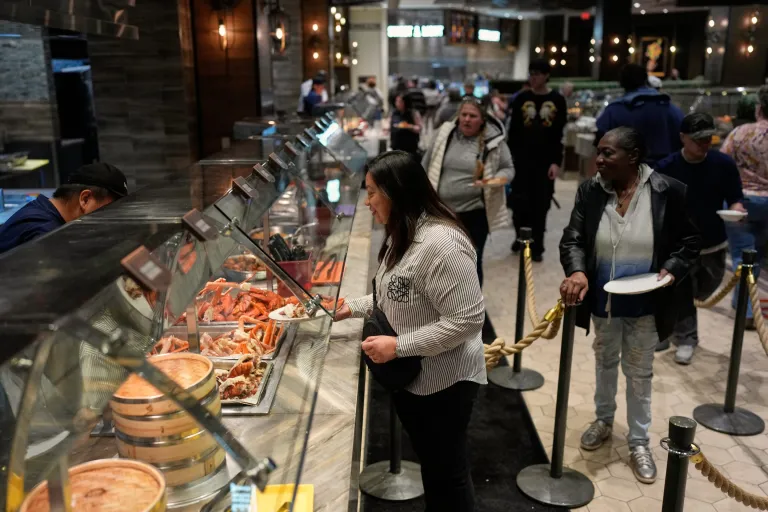
For decades, Las Vegas buffets symbolized abundance at an affordable price, allowing visitors to eat quickly, cheaply, and return to the casino floor. That era is steadily fading. Across the Strip, many of the city’s once-ubiquitous buffets have closed or transformed, replaced by upscale dining experiences, trendy food halls, and restaurants led by celebrity chefs.
The first Las Vegas buffet opened more than 80 years ago, a western-themed spread offering cold cuts and cheese for just one dollar. The model was never designed to generate significant profit. Instead, buffets functioned as loss leaders, keeping guests fed and moving efficiently back to gambling. Today, that economic logic has shifted, as rising labor, food, and operating costs make low-priced buffets increasingly unsustainable.
From Casino Workhorse to Costly Indulgence
Only about a dozen buffets remain on the Las Vegas Strip, down sharply from pre-pandemic levels. Many closed during COVID-19 shutdowns and never reopened, as operators reassessed whether the traditional buffet still made financial sense. In its place, resorts have leaned into dining concepts that emphasize variety, branding, and higher margins.
Before closing in 2020, the Carnival World Buffet at the Rio marketed itself as the city’s largest buffet, offering hundreds of international dishes for around $30. It has since been replaced by a food hall concept designed to offer multiple cuisines with faster service and clearer price points. Similar transitions occurred elsewhere, as properties moved away from expansive buffet footprints toward modular dining options.
Food halls now occupy former buffet spaces across the Strip, reflecting broader consumer preferences for customization and perceived quality. Rather than one entry fee, diners pay individually for ramen, sushi, burgers, or tacos, often prepared in open kitchens designed to emphasize freshness and craft.
A Foodie Reputation Reshapes the Strip
Las Vegas has worked for years to rebrand itself as a global food destination, not just a gambling hub. That shift has fueled demand for higher-quality dining and experiences that feel exclusive or theatrical. According to longtime food journalists and tour guides, buffets have not disappeared so much as evolved into attractions.
Luxury buffets now emphasize spectacle, from towering crab leg displays to carving stations serving prime rib and smoked brisket. High-profile examples at resorts operated by major casino companies charge well over $100 per person, positioning the buffet as an experience rather than a bargain.
Visitors at resorts like the Palms Casino Resort can still find buffets, but at prices that would have been unthinkable a generation ago. The A.Y.C.E Buffet, for example, features endless seafood, specialty pastas, and themed entertainment nights, blending dining with live performance.
“It’s Part of the Culture”
For longtime visitors, the disappearance of affordable buffets feels personal. Many compare it to the loss of other low-cost Las Vegas staples, such as the 99-cent shrimp cocktail. These offerings once reinforced the idea that anyone could feel wealthy in Las Vegas, if only for a weekend.
Regular visitors say buffets delivered a unique psychological appeal. Loading a plate with crab legs or fried chicken offered a visceral thrill, a sense of excess tied closely to the city’s identity. While high-end buffets preserve some of that feeling, their price points exclude many middle-class travelers who once relied on inexpensive dining to stretch their budgets.
Some visitors believe the decline of affordable buffets contributes to perceptions that Las Vegas has become too expensive, potentially discouraging repeat tourism. Others argue the city is simply adapting to changing tastes and economic realities.
A Luxury Experience With a Narrower Audience
At properties like Wynn Las Vegas and Caesars Palace, buffets remain grand and visually striking, but no longer function as mass-market amenities. Instead, they serve a narrower audience willing to pay for premium ingredients and theatrical presentation.
Industry observers note that buffets will likely remain part of Las Vegas, but in fewer numbers and with a different purpose. Rather than feeding the masses cheaply, modern buffets aim to compete with fine dining, social media appeal, and immersive entertainment.
As one food tour guide put it, the old-style buffet served its purpose in a different era. Today’s Las Vegas has moved on, trading affordability for experience, and nostalgia for margins. Whether that shift strengthens or weakens the city’s long-term appeal remains an open question.