A global conflict, a local financial squeeze
The Iran war impact on household finances is becoming increasingly visible, but not evenly distributed. While the geopolitical conflict may seem distant to many consumers, its economic ripple effects are shaping everyday costs, particularly through energy and food prices.
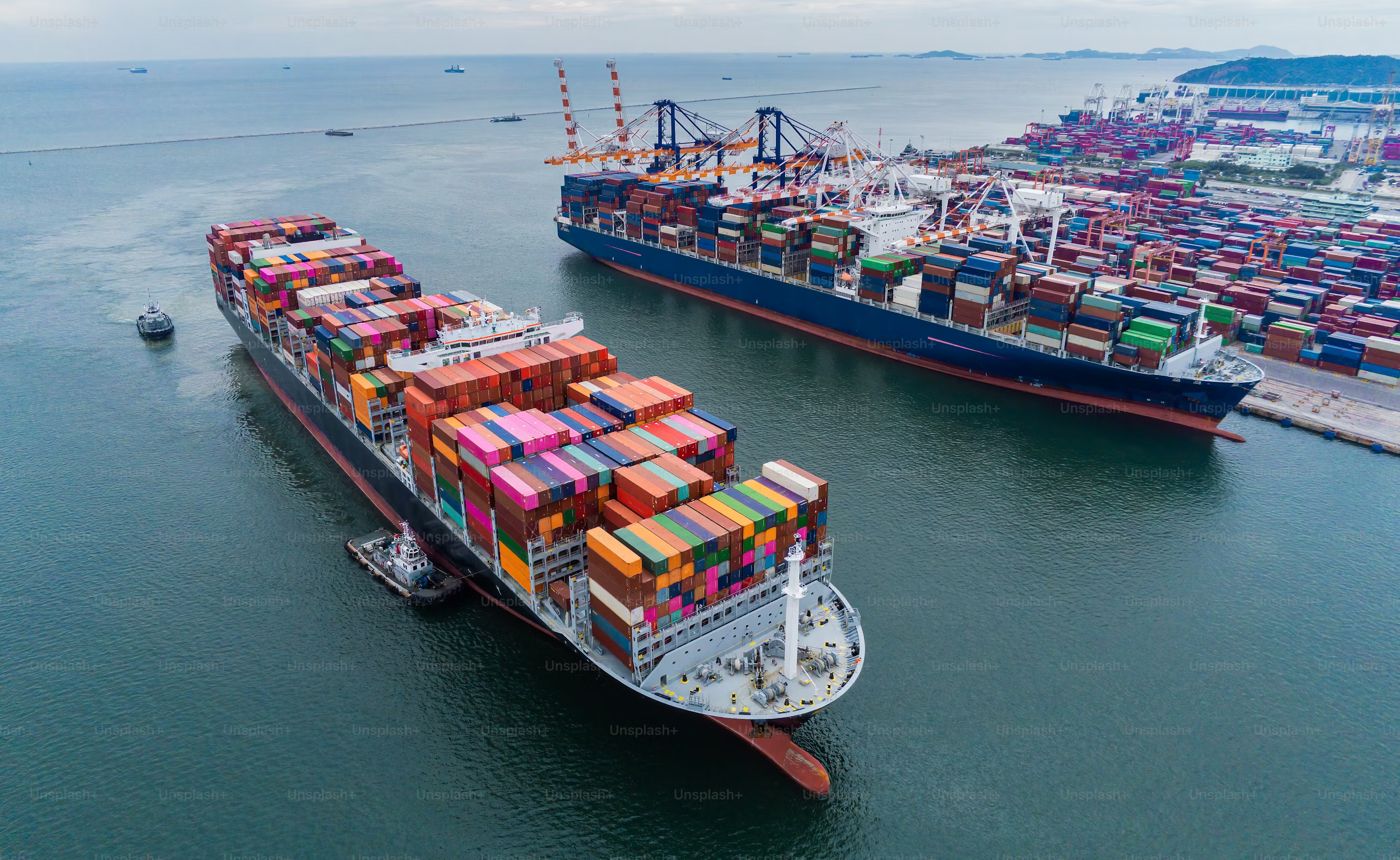
Since military escalation involving Iran disrupted key shipping routes, oil markets have reacted sharply. Prices have risen amid concerns over restricted supply through the Strait of Hormuz, a vital corridor responsible for roughly one fifth of global oil flows. As a result, consumers are experiencing higher fuel costs at a time when affordability pressures were already elevated.
These changes are not isolated to gasoline. Energy costs feed into broader inflation, affecting transportation, agriculture, and ultimately grocery bills. The cumulative effect is a steady increase in essential living expenses, with households absorbing much of the burden.
Why geography matters more than ever
The financial consequences of the Iran war depend significantly on where households are located. Regional spending patterns reveal that some communities are far more exposed to rising costs than others.
In smaller metropolitan areas, particularly across the southern United States and parts of the Midwest, households allocate a larger share of their income to essentials such as fuel, food, and utilities. In some cities, this share reaches approximately 16 percent of total household spending.
These regions also tend to have higher concentrations of lower-income households, making them more vulnerable to price increases. For families already operating within tight budgets, even modest rises in fuel or grocery costs can create meaningful financial strain.
By contrast, households in larger coastal cities, particularly on the West Coast and in the Northeast, spend a smaller portion of their income on these categories, often closer to 11 percent or less. Higher average incomes and more diversified spending patterns help cushion the immediate impact.
Energy costs ripple through the economy
The surge in oil prices is not just a story about gasoline. It is a broader economic force with multiple downstream effects.
Agriculture is one of the most affected sectors. Fertilizer production relies heavily on natural gas, meaning higher energy prices directly increase farming costs. Producers can absorb only a limited portion of these expenses before passing them on to consumers, contributing to rising food prices.
Transportation is another critical channel. Increased fuel costs affect logistics networks, from trucking and shipping to delivery services. These additional expenses are gradually reflected in the prices of goods across industries.
Forecasts suggest that food inflation could accelerate significantly in the coming months. Even modest increases in headline inflation can compound over time, particularly for households with limited financial flexibility.
Consumer sentiment and economic outlook
Beyond direct costs, the psychological impact of the conflict is also influencing economic behavior. Rising fuel prices and geopolitical uncertainty are weighing on consumer confidence, a key driver of spending.
While overall consumer spending is still expected to grow, projections have been revised downward. Economic growth forecasts have also been adjusted, reflecting the combined effect of higher energy costs and cautious consumer sentiment.
This environment creates a delicate balance. Households are continuing to spend, but with increased sensitivity to price changes and economic signals.
Winners in an otherwise strained landscape
Despite widespread cost pressures, certain sectors are benefiting from the current dynamics. The energy industry, particularly oil drilling and refining, is experiencing a short-term boost.
Regions with strong ties to energy production are seeing modest gains in economic output. Areas such as West Texas, where drilling activity is concentrated, are positioned to capitalize on higher oil prices. Similarly, refining hubs in major metropolitan areas are experiencing increased activity.
However, the benefits are not evenly distributed within these regions. While output may rise, job growth is expected to remain relatively limited, as companies can scale production without significantly expanding their workforce.
A prolonged impact depends on uncertainty
The duration and severity of the Iran war impact on household finances will largely depend on how long disruptions persist and how quickly global trade routes stabilize.
If tensions ease and supply chains recover, price pressures may moderate. However, prolonged instability could entrench higher costs across multiple sectors, deepening the financial strain on vulnerable households.
For now, the conflict serves as a reminder of how interconnected global events and personal finances have become. Even distant geopolitical developments can quickly translate into tangible economic realities at the household level.