Hybrid work office space has moved from a temporary pandemic response to a permanent feature of the American workplace. With more than half of U.S. employees now working in a hybrid arrangement, the commercial real estate industry is confronting a structural shift that challenges decades of accepted practice.
According to a recent Gallup survey, 52 percent of U.S. workers identify as hybrid employees. That change has landed at a moment when office leasing activity has slowed, creating pressure on landlords who once relied on long-term commitments and predictable occupancy. As hybrid work office space becomes the norm rather than the exception, building owners are being forced to rethink how they attract and retain tenants.
The end of the set-and-forget lease
For generations, the foundation of office real estate was simple, secure a tenant for ten years or more and manage around that certainty. Chase Garbarino, chief executive of HqO, a software platform that analyzes office building performance across more than one billion square feet globally, says that model is no longer reliable.
Garbarino argues that hybrid work has permanently altered employer behavior. Companies are increasingly reluctant to lock themselves into long leases when workforce size and attendance patterns remain fluid. As a result, landlords are losing the guaranteed cash flow that once defined the business.
In response, Garbarino believes office owners must adopt a mindset closer to the hospitality industry. Buildings now need to deliver ongoing value, consistent service, and flexibility, rather than relying on location alone. The message to tenants is no longer sign once and forget, but renew because the experience still works.
A K-shaped split in office demand
Data from brokerage firms underscores how uneven the transition has become. A 2025 analysis from JLL and Commercial Observer found that average lease terms vary sharply by sector. Financial services firms are still committing to leases averaging more than seven years. Technology companies have shortened that to just over five years, while artificial intelligence startups are signing leases closer to three years.
Even premium Class A buildings, once thought immune to such changes, are seeing shorter commitments. Garbarino says this reflects a broader reality, companies must continually justify bringing employees into physical spaces.
That divergence has created a two-track office economy. High-end properties in major cities are performing well, while older or less differentiated buildings struggle to compete.
Luxury offices surge in key markets
In Manhattan, demand for top-tier office space has actually increased despite broader uncertainty. Reporting from the Financial Times shows that leases priced at $100 per square foot or more hit a record in 2025. Brokerages including CBRE confirm that financial services, legal firms, and select technology companies are driving this trend.
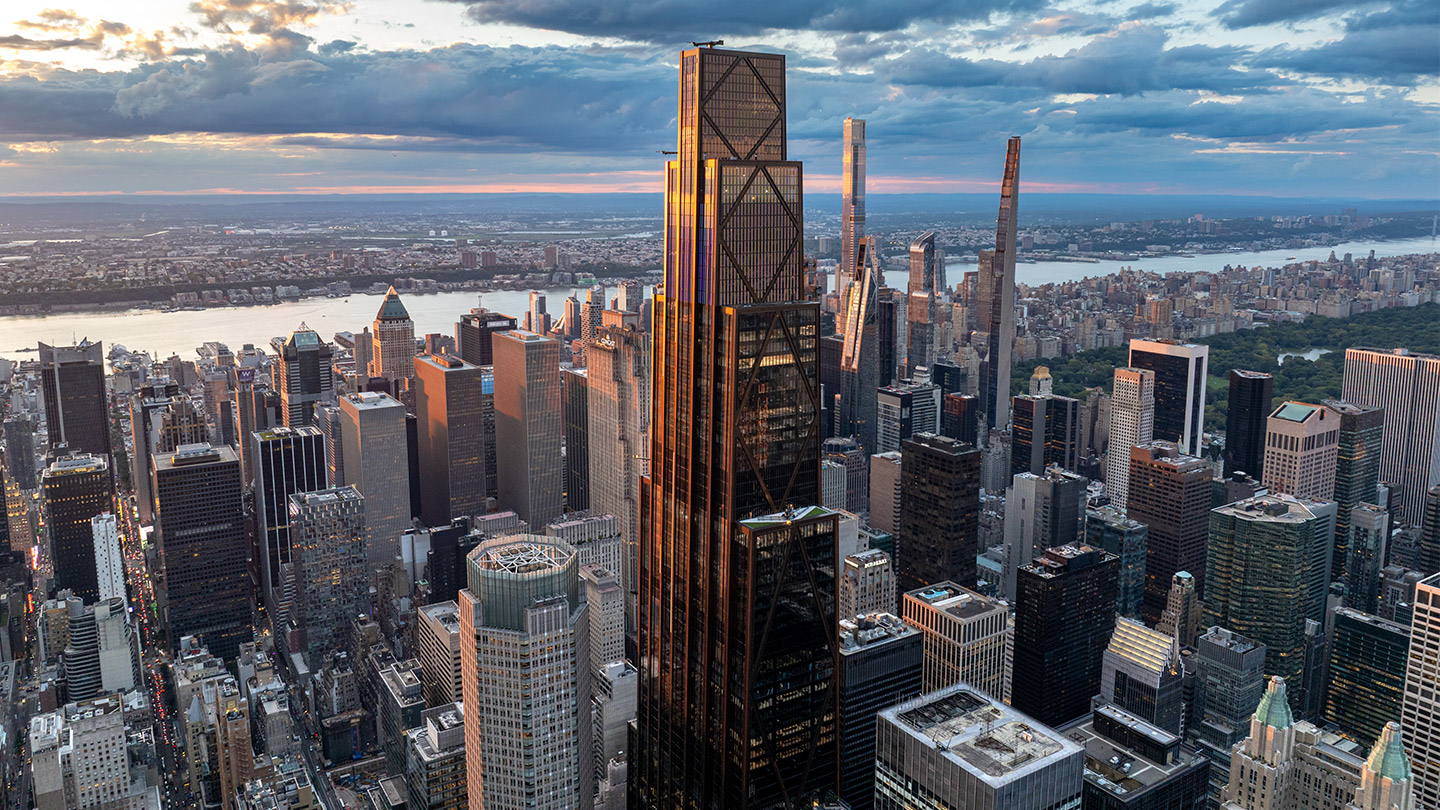
JPMorgan Chase offers a clear example. The bank recently moved into its newly rebuilt headquarters at 270 Park Avenue, a $3 billion, 60-story tower occupying an entire city block. The building includes wellness facilities, meditation rooms, dozens of dining options, and hospitality-style common spaces designed to support long hours on site.
The strategy is not limited to New York. Across the country, companies are investing heavily in office environments meant to rival high-end hotels and resorts.
Amenities help, but policy matters more
Outside the Northeast, similar investments are underway. Larry Ellison’s company, Oracle, is developing a 70-acre campus in Nashville that will include a luxury hotel and a Nobu restaurant. The project reflects a broader belief that offices must offer experiences employees cannot replicate at home.
Still, Garbarino cautions that amenities alone do not solve the hybrid challenge. His data shows that while features like nap pods and wellness spaces are heavily used, they rarely drive attendance on their own. Instead, they function best as support systems for employees already required to be in the office.
In this environment, office space itself has become closer to a commodity. Location remains important, but it is no longer sufficient. The future of hybrid work office space will depend on how well landlords align building design, services, and tenant policies to create environments people accept, if not actively seek out.