American travelers in their twenties are increasingly turning east. As Gen Z romanticizes Japan, the country has quietly replaced France as the place young Americans idealize as cultured, orderly, and aspirational. Travel data from American Express show bookings to Japan among Gen Z and millennials have risen more than 1,300% since 2019, a surge that reflects more than curiosity about food or pop culture.
For many in this cohort, Japan represents a version of public life they no longer expect to encounter in the United States. Trains arrive on time, streets appear spotless, and strangers follow unspoken rules that make crowded cities feel calm. In an era of viral videos documenting public confrontations and social breakdowns, this everyday civility has become part of Japan’s allure.
From niche fandom to generational fixation
What started years ago as a niche fascination with anime, manga, and sushi has matured into a broader cultural obsession. Streaming platforms have played a central role. Netflix reported in 2025 that anime viewership had tripled over five years, reinforcing familiarity with Japanese cities, social norms, and aesthetics long before travelers arrive.
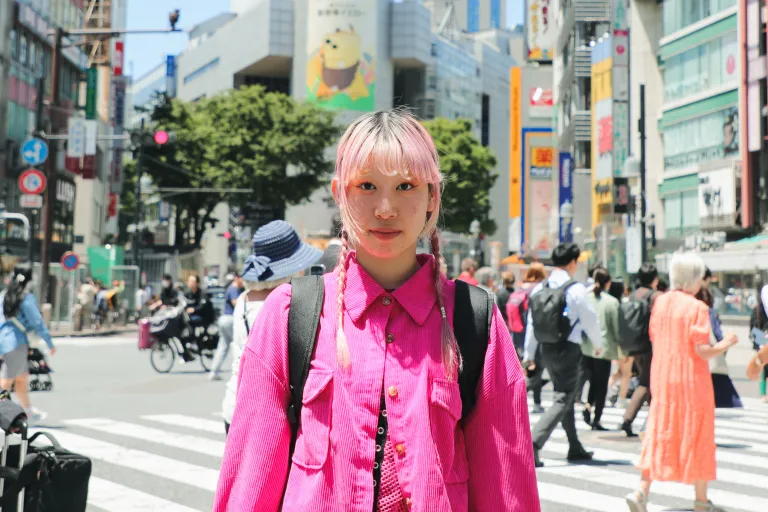
For first-time visitors, Tokyo is often less a historical destination than a living extension of the media they grew up consuming. The city feels recognizable, even comforting, despite its scale. As Gen Z romanticizes Japan, the country has come to occupy the symbolic space that Paris and Rome once held for earlier generations, a shorthand for taste, refinement, and a better way of living.
Soft power in an uncertain era
Japan’s appeal is not accidental. Decades of cultural exports, from consumer electronics to global entertainment franchises, have given the country extraordinary influence without overt political messaging. Political scientist Joseph Nye famously described this as soft power, the ability to shape preferences through attraction rather than force.
That influence has only grown as confidence in American institutions has weakened. Even Nye has argued that recent political turbulence has contributed to a decline in the United States’ global soft power. Against that backdrop, Japan appears stable, predictable, and quietly competent.
Anthropologist Merry White has described a “Japan, not Japan” effect, in which once-distinct imports such as ramen, sushi, or minimalist clothing become so normalized that their origins fade. By the time young Americans land in Tokyo, Japan already feels embedded in their daily lives.
Order as a form of luxury
The modern fascination with Japan also reflects changing definitions of status. Where French cuisine and fashion once signaled sophistication, Japanese influences increasingly carry that weight. Tokyo has held the distinction of having more Michelin-starred restaurants than any other city for over 15 years, reinforcing its reputation for precision and quality.
Yet many Gen Z travelers are just as enamored with humbler experiences. Convenience-store egg salad sandwiches, onigiri, and late-night snacks are praised for being inexpensive and consistently good. These small pleasures are elevated not because they are luxurious, but because they work.
In celebrating this reliability, young visitors are implicitly critiquing American public life, where basic services can feel unreliable and social interactions strained. The appeal is not extravagance, but order.
Clean cities and shared responsibility
Nowhere is this contrast clearer than in Japan’s urban cleanliness. Tokyo, one of the world’s densest cities, remains remarkably tidy despite having few public trash cans. Visitors often cite this as evidence of a shared sense of responsibility rather than strict enforcement.
White has argued that people carry their trash home because it is socially expected, not because they fear punishment. For Americans accustomed to debates over civility and personal freedom, this quiet cooperation feels almost radical.
As Gen Z romanticizes Japan, many frame these norms as a social agreement that makes dense living tolerable, even pleasant. In comparison, American public spaces can feel contentious, with politeness treated as optional.
The risks of idealization
This romantic view, however, can flatten reality. Japan has faced decades of economic stagnation since the bursting of its asset bubble in the early 1990s, along with demographic challenges tied to an aging population. Analysts frequently point out that social harmony can come with pressures to conform that outsiders rarely experience during short visits.
Reducing Japan to a moral counterpoint to the United States also risks overlooking more practical motivations for travel, affordability, safety, and novelty chief among them. Berkshire Hathaway Travel Protection consistently ranks Japan among the safest countries in the world, particularly for public transportation, an important factor for young solo travelers.
Media, food, and the search for calm
Research suggests Gen Z travel choices are heavily shaped by media exposure rather than philosophical alignment. American Express notes that most Gen Z and millennial travelers say a TV show, movie, or social media post inspired their trip, a trend known as set-jetting.
Food remains another powerful draw. Nearly half of young travelers report planning trips around specific restaurants or food events, and Japan’s range from street food to fine dining fits neatly into that behavior.
Still, the emotional undertone is hard to ignore. In a culture saturated with online conflict, the quiet order of a Japanese train car reads less like reality and more like aspiration. For a generation skeptical of institutions at home, Japan’s dense web of social expectations feels less oppressive than reassuring, a shared structure that makes daily life run smoothly.