Oil Shock Revives Inflation Fears
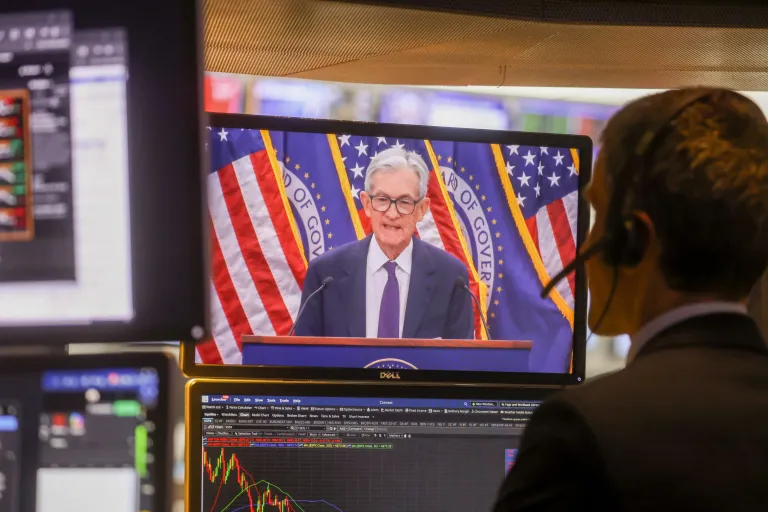
Financial markets may have welcomed signals that the conflict between the United States, Israel, and Iran could be nearing an end, but investors expect monetary policy to remain cautious. Analysts say the Federal Reserve is likely to maintain a tight stance for months even if hostilities ease.
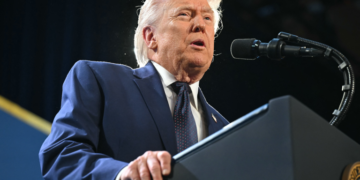
President Donald Trump said this week the war was “very complete, pretty much,” suggesting the military confrontation could soon wind down. Yet the outlook for monetary policy remains uncertain, particularly as the Fed hawkish after Iran war scenario becomes increasingly central to investor expectations.
Energy markets reacted immediately to the conflict. Oil prices surged above $100 per barrel during the weekend following the escalation, driven by fears that Middle East supply routes could be disrupted. The jump in energy prices has renewed concerns about inflation at a time when price growth in the United States remains above the Federal Reserve’s target.
Inflation data released by the Bureau of Labor Statistics showed consumer prices rising 2.4 percent over the past year, still above the Fed’s 2 percent objective. Several categories, including food and energy services, continue to record higher increases.
Because energy costs influence transportation, manufacturing, and household budgets, central banks tend to treat sustained oil price spikes as a potential inflation driver.
Can the Fed Ignore Oil’s Ripple Effect?
Strategists at Macquarie argue that the inflationary impact of the conflict may linger even after fighting subsides. Thierry Wizman and Gareth Berry wrote in a note to clients that market psychology and economic data could remain affected well into the spring reporting cycle.
According to their analysis, even a short-lived conflict can influence inflation expectations among consumers and businesses. Those expectations often feed into wage demands and pricing decisions across the economy.
The strategists noted that Trump’s suggestion the conflict could end quickly may reflect Iran’s weakened ability to respond militarily rather than a complete de-escalation. Even if hostilities diminish by the end of the month, the delay is long enough to influence economic data released in the coming months.
For central banks, perception matters as much as actual price movements. Policymakers monitor whether higher energy prices begin to filter through to core inflation, which excludes volatile food and energy categories but can still be indirectly affected.
Macquarie analysts expect most global central banks to lean toward hawkish messaging while oil prices remain elevated.
Strait of Hormuz Risk Adds to Market Anxiety
A key source of uncertainty lies in the Strait of Hormuz, one of the world’s most important energy shipping routes. Iran borders the narrow passageway, which serves as a corridor for oil exports from several Gulf states including the United Arab Emirates, Qatar, Kuwait, and Iraq.
Concerns about shipping disruptions have made some tanker operators hesitant to pass through the strait. Insurance costs for vessels have also risen as maritime risks increase.
The U.S. government has attempted to reassure markets that the route will remain open. The White House has discussed providing military escorts to commercial ships traveling through the area. However, messaging around those plans has been inconsistent.
Energy Secretary Chris Wright initially claimed that a U.S. Navy vessel had escorted an oil tanker through the strait. The statement was later withdrawn, and the White House clarified that no such escort had taken place.
Despite the uncertainty, the broader concern for policymakers is the potential for prolonged pressure on global energy supplies.
A Divided View on the Fed’s Next Move
The Federal Reserve faces a dual mandate, controlling inflation while supporting stable employment. At the moment, investors believe inflation will dominate the central bank’s thinking.
Market pricing compiled by CME’s FedWatch tool suggests traders see more than a 99 percent probability that the Fed will leave interest rates unchanged at its upcoming policy meeting.
Yet some economists believe markets may be overlooking the labor market side of the equation.
Aditya Bhave, a senior economist at Bank of America, argues that oil-driven supply shocks can weaken economic activity even as they push prices higher. In such cases, the Fed must balance competing risks.
Recent employment data showed the U.S. labor market cooling modestly. Nonfarm payrolls fell by 92,000 in February, while the unemployment rate edged up to 4.4 percent.
Bhave noted that the situation differs from the inflation surge following Russia’s invasion of Ukraine in 2022, when economic demand was strong and unemployment was below 4 percent. At that time, the Federal Reserve could focus primarily on inflation.
Today, with softer job growth and less fiscal stimulus supporting consumers, the central bank may be forced to weigh the possibility of slowing economic momentum.
If oil prices remain elevated for an extended period, analysts say policymakers could face one of the most complex balancing acts of the current economic cycle.