Why are JetBlue checked bag fees rising now?
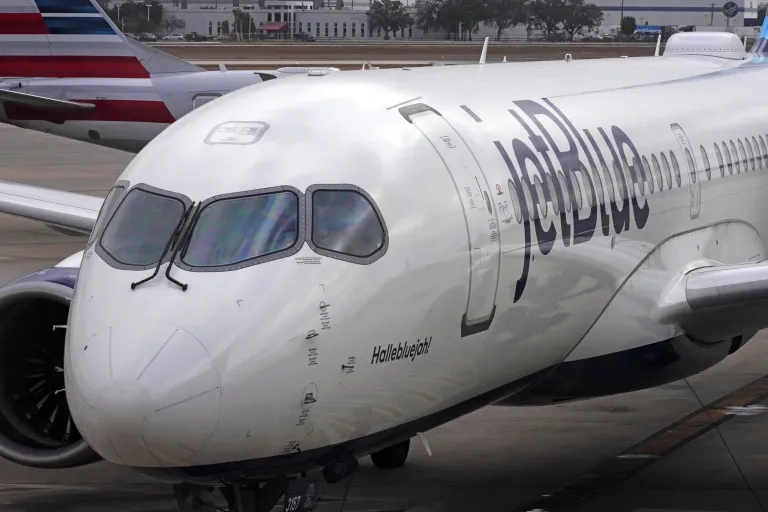
JetBlue checked bag fees have increased as the airline responds to a sharp rise in fuel costs tied to the ongoing conflict in the Middle East. The U.S. carrier confirmed that new pricing took effect this week, with passengers now paying more for both first and second checked bags across most domestic routes.
For standard economy travelers, the first checked bag now costs $39, up from $35. During peak travel periods, including spring holidays and the summer season, that fee rises to $49. The airline stated that these adjustments are part of a broader effort to offset operational pressures while maintaining competitive base fares.
JetBlue explained that optional service charges, such as baggage fees, allow airlines to manage rising costs without uniformly increasing ticket prices. The approach reflects a wider industry strategy, particularly in the United States where fuel surcharges are less common than in other regions.
Fuel shock: how the Iran conflict is impacting aviation
The increase in JetBlue checked bag fees comes amid a significant surge in jet fuel prices, which have climbed more than 85 percent since the outbreak of war involving Iran in late February. The conflict has disrupted shipping routes through the Strait of Hormuz, a critical corridor for global oil transport.
Airspace restrictions across parts of the Middle East have added further strain. Airlines are being forced to take longer flight paths to avoid affected regions, increasing fuel consumption and operational complexity. As a result, the cost per gallon of jet fuel has risen sharply, reaching levels that are putting pressure on airline margins.
Fuel typically represents one of the largest expenses for airlines, often accounting for roughly a quarter of total operating costs. The recent spike has therefore had an immediate and material impact on profitability across the sector.
A broader industry shift toward ancillary fees
Airlines globally are responding in different ways. Many international carriers have introduced fuel surcharges or raised ticket prices directly. In contrast, U.S. airlines, including JetBlue, are more likely to adjust ancillary fees such as baggage charges, seat selection, and premium upgrades.
JetBlue has also increased fees for second checked bags, with prices rising to $59 during off-peak periods and $69 during peak travel windows. Analysts suggest this trend is likely to continue, especially if fuel prices remain elevated or volatile.
Industry observers note that once one major carrier raises fees, competitors often follow to protect margins. This dynamic could lead to broader pricing changes across the U.S. airline market in the coming months.
What it means for travelers and airline strategy
For travelers, the changes underscore the growing importance of ancillary fees in the total cost of flying. While base fares may remain stable, the overall price of travel can increase significantly once add-ons are included.
JetBlue emphasized that some passengers will still be exempt from these higher fees. Customers holding co-branded credit cards or those enrolled in higher tiers of the airline’s loyalty program may continue to receive free checked bags. Additionally, many transatlantic routes will retain complimentary baggage allowances.
From a strategic perspective, the move highlights how airlines are balancing cost pressures with competitive positioning. By shifting increases toward optional services, carriers aim to preserve price-sensitive demand while still addressing rising input costs.
As geopolitical tensions continue to influence global energy markets, airlines are expected to remain agile in their pricing strategies. For now, JetBlue checked bag fees serve as a clear signal of how external shocks are translating into tangible costs for consumers.