A market rebound built on fragile optimism
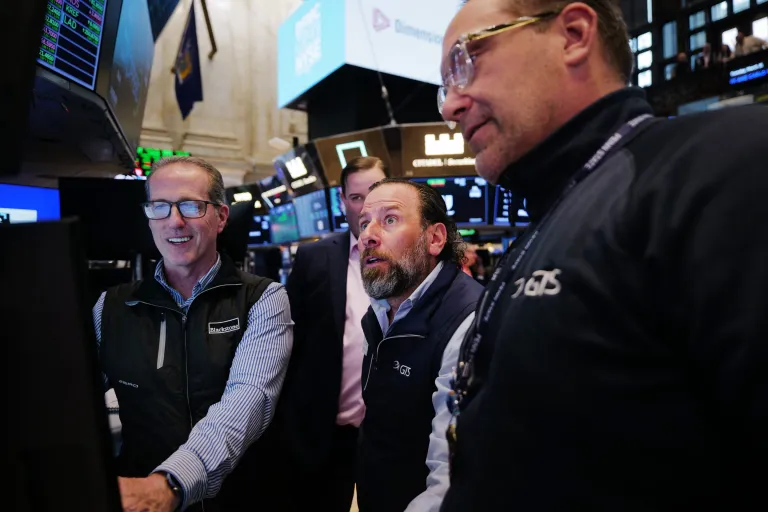
A sharp Wall Street rally tied to an Iran war rumor delivered one of the strongest trading sessions in nearly a year, underscoring how quickly sentiment can shift in uncertain geopolitical conditions.
Major U.S. indexes surged on Tuesday, fueled by unverified signals suggesting a potential de-escalation in tensions involving Iran. The rally came despite conflicting statements from political leaders and little concrete evidence of progress toward ending hostilities.
The Nasdaq jumped 795 points, recovering a significant portion of its recent losses. The S&P 500 rose 2.89 percent, adding approximately $1.7 trillion in market value, while the Dow Jones Industrial Average climbed 1,125 points. All three benchmarks recorded their largest single-day gains since May.
What triggered the sudden surge?
The turning point appeared to come after reports from Iranian state media referencing an unconfirmed conversation between President Masoud Pezeshkian and European officials. According to the report, Iran expressed willingness to end the conflict under certain conditions, including guarantees against future attacks.
Markets reacted immediately. Equities surged despite the lack of verification and despite similar statements having been made earlier without market impact.
The rally had already begun building momentum the night before. A report indicated that former U.S. President Donald Trump had privately suggested openness to ending military operations, even if key logistical challenges, such as reopening the Strait of Hormuz, remained unresolved.
That waterway is a critical artery for global energy supply, accounting for roughly 20 percent of worldwide oil flows. Any disruption carries significant implications for both energy markets and broader economic stability.
Mixed signals from Washington and Tehran
Despite the optimism reflected in equity markets, official communications painted a far more ambiguous picture.
Public statements from U.S. leadership suggested progress, with officials indicating that discussions were ongoing. However, Iranian authorities contradicted those claims, stating that no direct negotiations had taken place in over a month and that communication had been limited to indirect channels.
Defense officials also avoided providing clarity. In a pre-market briefing, senior military leaders described operations as progressing but declined to outline any timeline or strategic shift regarding the conflict or the security of key shipping routes.
The divergence in messaging did little to slow investor enthusiasm, at least in the short term.
Oil markets tell a different story
While equities surged on hopes of de-escalation, oil markets reacted with caution, reflecting ongoing supply risks.
Brent crude rose nearly 5 percent to settle at $118.35 per barrel, its highest level since mid-2022. The increase followed reports of an Iranian strike on a Kuwaiti oil tanker near Dubai, reinforcing concerns about continued instability in the region.
This divergence highlights a growing disconnect between asset classes. Equity investors appeared to price in a best-case scenario of easing tensions, while energy markets remained focused on immediate supply disruptions and geopolitical risk.
A rally driven more by narrative than certainty
The scale of the rally was notable, but its foundation remains uncertain. Much of the upward momentum was driven by interpretation rather than confirmed developments.
Markets often respond quickly to perceived turning points, particularly in periods of heightened volatility. However, when those signals are based on incomplete or conflicting information, the resulting movements can prove fragile.
The latest Wall Street rally tied to an Iran war rumor reflects this dynamic. Investors responded to the possibility of peace, even as underlying indicators suggested that the situation remains unresolved.
As geopolitical tensions continue to evolve, market participants are likely to remain highly sensitive to headlines, with sentiment capable of shifting as quickly as it rose.