“Not unsustainable, but not on a good path”
Federal Reserve Chair Jerome Powell said the size of the US national debt remains manageable for now, but warned that the current trajectory poses long-term risks to the economy.
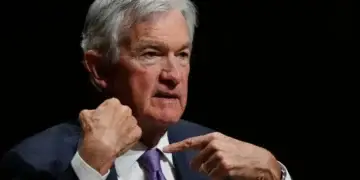
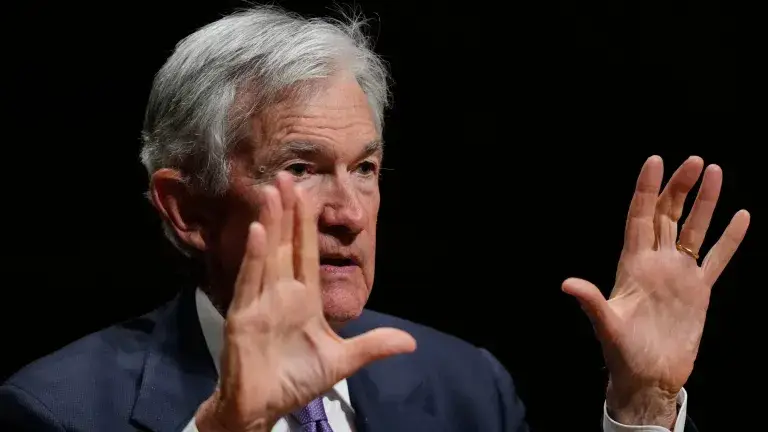
Speaking at Harvard University on March 30, Powell addressed the growing concern around the country’s $39 trillion debt, emphasizing that while the total level is not yet alarming, the direction of growth is increasingly problematic. The Jerome Powell US debt trajectory message was clear from the outset, the issue is not where the debt stands today, but how fast it is rising relative to economic output.
“The level of the debt is not unsustainable,” Powell said. “But the path is not sustainable, and it will not end well if we do not act fairly soon.”
His remarks reflect a long-standing position that distinguishes between the absolute size of government debt and the sustainability of its growth over time.
Debt growth outpacing the economy
A central concern highlighted by Powell is the widening gap between debt accumulation and economic expansion. When debt grows faster than gross domestic product, the burden becomes increasingly difficult to manage over time.
Current projections underscore that challenge. Federal debt held by the public is expected to rise from just over 100 percent of GDP today to roughly 120 percent within the next decade, surpassing levels seen after World War II. At the same time, interest payments on that debt are accelerating sharply.
Net interest costs are projected to exceed $1 trillion in fiscal 2026, a significant increase from recent years. In the opening months of the current fiscal year alone, interest expenses have already outpaced defense spending, highlighting the growing pressure on federal finances.
Powell noted that while the United States benefits from issuing the world’s reserve currency and maintaining deep capital markets, those advantages do not eliminate long-term risks tied to persistent fiscal imbalances.
A realistic solution, but politically difficult
“We do not need to pay it down”
Despite the warning, Powell did not advocate for aggressive debt reduction. Instead, he pointed to a more measured objective, achieving primary balance, where government revenues and expenditures align before accounting for interest payments.
Under this approach, the economy would grow faster than the debt, gradually stabilizing the overall burden.
“We do not have to pay the debt down,” Powell said. “We need to reach primary balance and have the economy grow more quickly than the debt.”
However, the path to that outcome is complex. Closing the current deficit would likely require a combination of higher taxes, spending reductions, or stronger economic growth. Each of these options carries political and economic tradeoffs, particularly when major programs such as Social Security and Medicare are involved.
Powell also emphasized that fiscal policy decisions fall outside the Federal Reserve’s mandate, reinforcing the central bank’s limited role in addressing government debt directly.
Why the Fed is watching closely
“Stick to our knitting”
While the issue is primarily a matter for lawmakers, Powell made clear that fiscal stability has implications for monetary policy. A worsening debt situation could constrain the Federal Reserve’s ability to respond effectively to inflation or economic downturns.
Throughout his tenure, Powell has consistently defended the Fed’s independence, stressing the importance of focusing on its core responsibilities, maximum employment and price stability.
“There is always pressure to use policy tools for other purposes,” he said. “We have to remain focused on what we are responsible for.”
A fiscal crisis, if it emerged, could force the central bank into a more complicated role, potentially blurring the lines between monetary and fiscal policy. That scenario remains a key concern among economists and market participants.
A familiar warning with rising urgency
Powell’s comments add to a growing chorus of economic leaders raising concerns about US fiscal sustainability. Similar warnings have been voiced by policymakers and investors, who argue that rising debt levels could eventually crowd out public investment and limit economic flexibility.
At the same time, the debate remains far from settled. The United States has sustained high debt levels for decades without triggering a crisis, and some analysts argue that the risks are often overstated.
Still, Powell’s framing reflects a balanced position. The debt is not an immediate threat, but ignoring its trajectory could increase future vulnerabilities.
With his term as Federal Reserve chair set to conclude in May 2026, the Jerome Powell US debt trajectory warning may stand as one of the defining messages of his leadership. The conclusion is straightforward, the current situation is manageable, but without adjustment, the long-term outlook becomes significantly more uncertain.