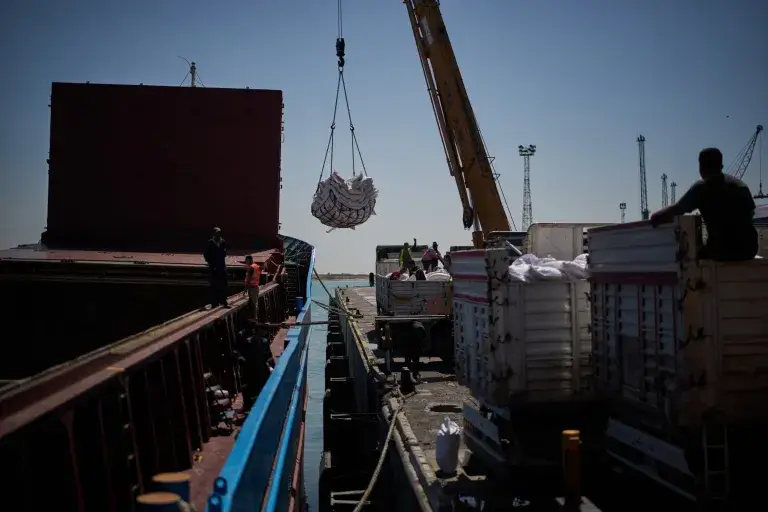
A supply shock few economies can avoid
The global economy Iran war shock is intensifying as sustained conflict in the Persian Gulf disrupts energy flows, damages infrastructure, and drives sharp increases in commodity prices. What began as a regional escalation has quickly evolved into a systemic economic threat, affecting both developed and emerging markets.
Oil prices have surged since the outbreak of hostilities, with Brent crude rising above $100 per barrel from pre-war levels near $70. The disruption stems largely from Iran’s effective closure of the Strait of Hormuz, a vital corridor through which roughly one-fifth of the world’s oil supply normally passes.
The resulting supply shortfall, estimated at tens of millions of barrels per day, marks one of the most severe energy disruptions in modern market history. Economists warn that such shocks have historically preceded global recessions, particularly when accompanied by rising inflation.
“Infrastructure destruction changes everything”
What distinguishes the current crisis is not only the scale of disruption but its potential duration. Repeated attacks on refineries, pipelines, and export terminals have inflicted lasting damage on critical energy infrastructure across the region.
A key example is the strike on Qatar’s Ras Laffan industrial complex, one of the world’s largest liquefied natural gas hubs. The attack has significantly reduced global LNG export capacity, with repair timelines stretching into multiple years.
This shift from temporary disruption to structural damage has altered economic expectations. Analysts now anticipate prolonged supply constraints rather than a short-term shock, increasing the likelihood of sustained price volatility across energy markets.
The consequences extend beyond oil and gas. Helium production, a lesser-known but essential byproduct of natural gas, has also been disrupted, affecting industries from semiconductor manufacturing to healthcare imaging.
Fertilizer shock raises food security concerns
Can higher fertilizer prices trigger a food crisis?
The global economy Iran war shock is also being transmitted through agricultural supply chains. The Persian Gulf plays a central role in fertilizer exports, particularly nitrogen-based products such as urea and ammonia, which rely heavily on natural gas inputs.
With shipping routes constrained, fertilizer prices have surged. Urea prices have jumped by roughly 50 percent, while ammonia costs have risen significantly. These increases are already affecting major agricultural economies that depend on imports, including Brazil.
Higher input costs are expected to reduce fertilizer usage among farmers, leading to lower crop yields. Over time, this dynamic could translate into higher food prices and reduced availability, particularly in lower-income regions where food security is already fragile.
The ripple effects may take months to fully materialize, but early indicators point to mounting pressure on global food systems.
Energy rationing spreads across Asia
From air conditioning limits to fuel prioritization
As energy supplies tighten, governments across Asia are implementing emergency measures to manage shortages. Countries heavily reliant on imports through the Strait of Hormuz are among the most exposed.
Public sector restrictions are becoming increasingly common. In some cases, governments have reduced workweeks, limited air conditioning usage, and imposed energy-saving mandates on public employees. Elsewhere, fuel allocation policies prioritize households over businesses.
These measures reflect a broader trend, as policymakers attempt to shield vulnerable populations from rising costs while maintaining economic stability. However, such interventions often come at a fiscal cost, as governments subsidize energy prices or absorb price increases.
The strain is particularly acute in developing economies, where limited financial capacity constrains policy responses and increases exposure to external shocks.
A fragile U.S. economy faces new risks
Will rising oil prices tip the balance?
While the United States is relatively insulated due to its status as an energy producer, it is not immune to the global economy Iran war shock. Higher gasoline prices are already weighing on consumer sentiment, a key driver of economic activity.
Recent data suggest that the U.S. economy was slowing even before the conflict escalated. Growth had moderated significantly, and labor market indicators showed signs of weakening. The latest energy-driven inflation pressures could further dampen consumption and investment.
Economists are increasingly revising recession probabilities upward. The combination of elevated energy costs, slowing growth, and persistent inflation echoes conditions associated with past downturns.
Recovery likely to be slow and uneven
The global economy has demonstrated resilience in recent years, navigating a pandemic, geopolitical tensions, and inflationary cycles. However, the scale and nature of the current disruption present a different challenge.
Damage to energy infrastructure, combined with ongoing geopolitical uncertainty, suggests that recovery will not be immediate. Even under optimistic scenarios, rebuilding capacity and restoring supply chains could take years.
The central question now facing policymakers and markets is not whether the impact will persist, but how deep and prolonged it will become. As the conflict continues, the global economy Iran war shock is evolving from a short-term crisis into a defining macroeconomic event.