“A system working, but not for everyone?”
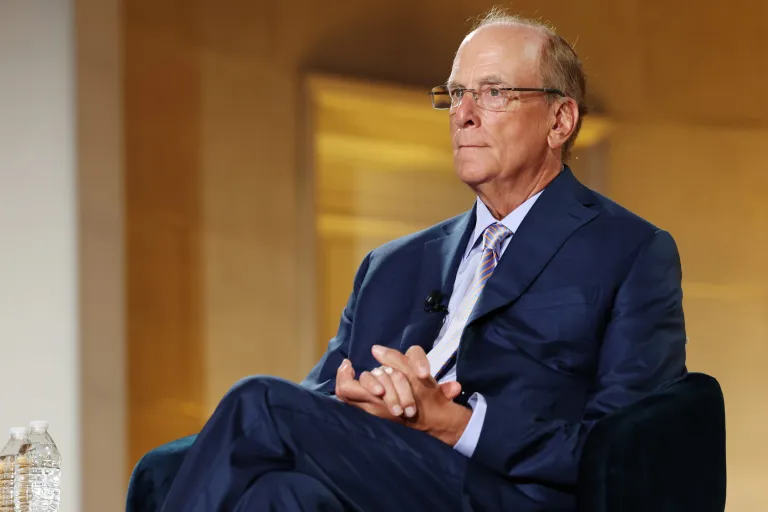
BlackRock CEO Larry Fink has warned that rising economic anxiety is rooted in a growing perception that capitalism not working for most people is no longer a fringe concern, but a mainstream sentiment shaping global markets and public opinion.
In his latest annual letter to shareholders, Fink argued that while capitalism continues to generate wealth, its benefits remain unevenly distributed. The result is a widening gap between those who own assets and those who rely primarily on wages, reinforcing the idea that capitalism not working for most people is becoming a defining economic issue.
Fink framed this shift against a backdrop of geopolitical instability and rapid technological change. Recent tensions in the Middle East, which have disrupted energy markets and driven up oil prices, have added pressure on households already facing elevated living costs. At the same time, the acceleration of artificial intelligence and global trade realignment has introduced both opportunity and uncertainty.
Asset ownership vs wages: “A widening divide”
A central theme in Fink’s letter is the long-term divergence between asset returns and wage growth. Since the late 1980s, he noted, investments in U.S. equities have significantly outpaced increases in median income, amplifying wealth inequality over time.
This dynamic, he suggested, is likely to persist in the era of artificial intelligence. Those with capital to invest in emerging technologies stand to benefit disproportionately as valuations rise, while workers without access to investment opportunities risk being left behind.
The implications extend beyond financial markets. Fink’s comments align with broader survey data showing declining confidence in economic mobility. Research on the American Dream indicates that only a slim majority of Americans still believe it is achievable, with optimism closely tied to education and income levels.
Why timing the market is not the solution
Fink also pushed back against the idea that short-term trading strategies can close the wealth gap. He emphasized that long-term participation in markets, rather than attempting to time volatility, has historically delivered stronger outcomes.
Over the past two decades, consistent investment in major indices such as the S&P 500 has generated substantial returns. Missing just a small number of high-performing days, however, can significantly reduce gains, highlighting the importance of sustained exposure.
For Fink, this reinforces a broader point. Long-term investing not only builds individual wealth, but also supports national economic development by channeling capital into industries and innovation.
“The real barrier is getting started”
Despite the theoretical benefits of investing, Fink acknowledged a structural barrier. Many households lack the financial cushion needed to participate in markets at all.
Data cited in his letter shows that a significant portion of Americans do not have enough savings to cover modest emergencies. In some cases, individuals are withdrawing retirement funds early to meet immediate expenses, undermining long-term financial security.
This reality underscores a key challenge in addressing inequality. The issue is not simply access to investment products, but the ability to accumulate surplus income in the first place.
Rethinking Social Security and long-term wealth building
Fink suggested that policy changes could play a role in expanding access to wealth creation. He pointed to the possibility of adapting elements of the Social Security system to incorporate long-term investment strategies, similar to public pension funds.
Such an approach, he argued, could allow individuals to benefit from economic growth while maintaining the program’s core function as a safety net. He emphasized that this would not constitute privatization, but rather a structural evolution aimed at improving outcomes over decades.
The proposal reflects a broader debate about how to balance stability with growth in retirement systems. For policymakers and investors alike, the question is whether existing frameworks can adapt to an economy increasingly defined by capital-driven returns.
A defining issue for modern capitalism
Fink’s assessment highlights a critical tension at the heart of modern economies. While markets continue to deliver strong aggregate performance, the perception that capitalism not working for most people is gaining traction.
For business leaders, this sentiment carries both economic and social implications. It shapes consumer confidence, political priorities, and ultimately the sustainability of the system itself.
As global uncertainty persists and technological disruption accelerates, the challenge will be ensuring that growth is not only generated, but more broadly shared.