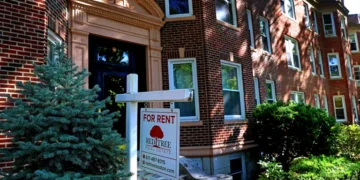
A generational shift in financial priorities
The Gen Z housing crisis is reshaping how families think about financial support, with a growing number of parents choosing to help their children buy homes rather than pay for college. As housing affordability declines and the value of higher education faces scrutiny, this shift reflects broader economic pressures on younger Americans.
A recent survey by Northwestern Mutual, based on more than 4,300 respondents, highlights the scale of this change. More than half of parents said they are open to helping their children with a home purchase, while 22 percent have already contributed to a down payment. Notably, nearly one-third believe supporting homeownership is more important than funding a college education, and over half view the two priorities as equally important.
This evolving mindset signals a recalibration of what financial success looks like in today’s economy, where traditional milestones are increasingly difficult to achieve.
Is college still worth the cost?
The rising cost of higher education, combined with uncertain job prospects, is prompting families to question the long-held assumption that a four-year degree is the primary path to upward mobility.
Recent graduates are entering a challenging labor market, with unemployment among degree holders exceeding the broader workforce. At the same time, underemployment remains elevated, with many graduates working in roles that do not require a college degree. These trends have weakened confidence in the return on investment for higher education.
Financial advisors note that parents are becoming more flexible with how they allocate long-term savings. Rather than committing entirely to tuition costs that can approach half a million dollars, some families are redirecting funds toward assets that may appreciate over time.
This reassessment does not signal the end of higher education’s importance, but it does reflect a more pragmatic approach to balancing cost, risk, and long-term financial outcomes.
“Betting on bricks” as a wealth strategy
For some families, homeownership is emerging as a more tangible and immediate path to wealth creation. Real estate offers both stability and the potential for appreciation, making it an attractive alternative to uncertain career returns tied to expensive degrees.
In some cases, parents are taking a strategic approach by helping their children enter the housing market early. For example, purchasing multi-unit properties allows young buyers to generate rental income while building equity, effectively turning a primary residence into an investment asset.
Financial experts argue that early entry into the housing market can have compounding benefits over time. Building equity in one’s twenties or early thirties can significantly influence long-term net worth, particularly as property values rise.
However, this strategy depends heavily on family resources, raising questions about inequality and access. Not all households have the financial capacity to provide such support, potentially widening the wealth gap between those who can and cannot access early homeownership.
A widening wealth divide across generations
The Gen Z housing crisis is unfolding against a backdrop of significant generational wealth imbalance. Older generations, particularly Baby Boomers and Generation X, control the majority of household wealth in the United States.
This concentration of assets has made it increasingly difficult for younger individuals to accumulate wealth independently. Rising home prices, which now exceed $400,000 on average, combined with higher borrowing costs, have pushed homeownership further out of reach. The average age of first-time homebuyers has climbed to around 40, a notable increase from previous decades.
As a result, many young adults are relying more heavily on family assistance to enter the housing market, reinforcing the role of intergenerational wealth transfers in shaping economic mobility.
Risky alternatives fill the gap
Without access to traditional wealth-building pathways, some members of Gen Z are turning to higher-risk financial strategies in an attempt to accelerate their earnings.
Survey data shows growing interest in speculative investments, including cryptocurrencies, meme stocks, and sports betting markets. These avenues, while potentially lucrative, carry significant volatility and risk, reflecting a sense of urgency among younger investors seeking to overcome financial barriers.
This trend underscores the broader challenges facing the generation. Limited access to stable wealth-building tools, such as affordable housing, is pushing some toward less predictable alternatives.
What this means for the future of wealth building
The shift toward funding homeownership over education marks a significant change in how families approach long-term financial planning. While real estate may offer a more direct path to building wealth, it also introduces new considerations around accessibility and equity.
As the Gen Z housing crisis continues, the role of parents in shaping financial outcomes is likely to grow. Earlier and more strategic wealth transfers could become a defining feature of the next decade, influencing not only individual trajectories but also broader economic patterns.
Ultimately, this trend reflects a deeper transformation in the American dream itself, where the path to financial stability is no longer linear, and where owning property may once again take precedence over traditional educational milestones.