The Trump universal 401(k) plan, unveiled during the president’s recent policy push on affordability, aims to extend retirement savings access to millions of American workers who currently lack employer-sponsored plans. The proposal would allow workers without workplace retirement accounts to participate in a government-backed savings program similar to the one used by federal employees, including an annual contribution match of up to $1,000.
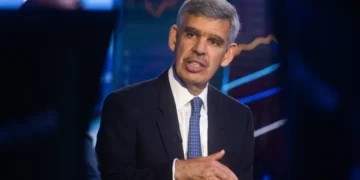
The policy could affect an estimated 54 million Americans who currently have no access to employer-sponsored retirement plans. While the proposal comes from the White House, its intellectual origins trace to a collaboration between National Economic Council Director Kevin Hassett and Teresa Ghilarducci, a progressive economist at the New School for Social Research.
Despite their ideological differences, both economists share a long-standing concern about retirement security in the United States, an issue that has grown more urgent as millions of Americans approach retirement with limited savings.
An Unlikely Partnership Around Retirement Security
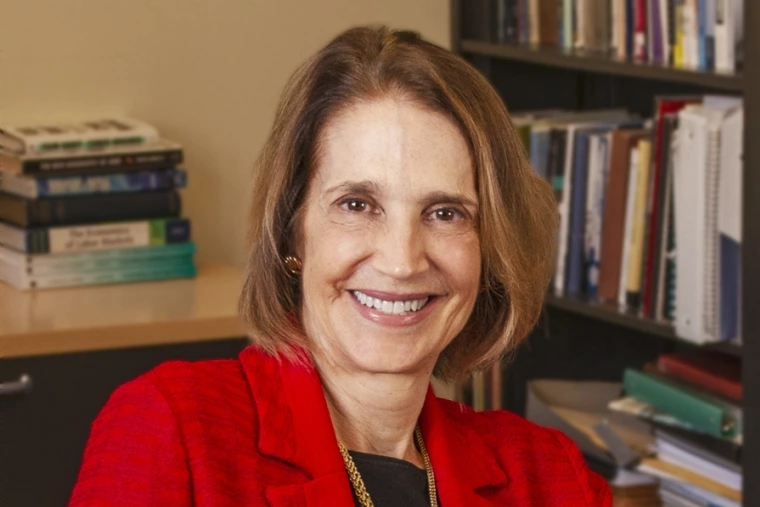
Ghilarducci, a professor of economics and director of the Schwartz Center for Economic Policy Analysis at the New School, has spent more than four decades studying retirement systems and pension policy. She describes herself as a “retirement nerd,” reflecting a career dedicated to improving financial stability for aging Americans.
Her collaboration with Hassett began in 2021 when he contacted her for feedback on a research paper examining retirement security in the U.S. At the time, Hassett was between roles in the Trump administration.
After reviewing the draft, Ghilarducci provided detailed comments. Hassett later invited her to become a co-author, transforming the project into a joint research effort that would ultimately influence the policy framework behind the Trump universal 401(k) plan.
The proposal reflects an unusual alliance between economists from different political traditions, united by a shared concern about how Americans prepare financially for retirement.
Why Retirement Policy Is Under Pressure
Structural changes in the U.S. retirement system have intensified the debate over savings policy. Over the past two decades, defined-benefit pensions have largely disappeared from private-sector employment, replaced by individual savings plans such as 401(k)s.
At the same time, demographic trends are placing pressure on the system. Roughly 76 million baby boomers are now entering or already in retirement, while Generation X is approaching retirement age with varying levels of savings.
Surveys highlight the growing gap between expectations and reality. A recent BlackRock survey found Americans believe they need approximately $2.1 million to retire comfortably. Yet the average 401(k) balance stood at about $144,400 in the third quarter of 2025, according to Fidelity Investments.
For many households, the difference between expected and actual savings has led to uncertainty about retirement timelines and financial security. Some retirees are returning to the workforce, partly because their savings have not grown as expected.
A Populist Policy Opportunity?
Ghilarducci argues that several economic and social trends have converged to create a political opening for retirement reform. The large-scale retirement of baby boomers has coincided with growing public awareness of wealth inequality and financial insecurity.
Movements such as Occupy Wall Street and Black Lives Matter have helped bring attention to disparities in wealth and retirement readiness across different communities.
In that context, retirement security has become an issue that cuts across political lines. Ghilarducci believes populist political leaders may find retirement policy particularly compelling because it directly affects workers’ long-term financial stability.
Her willingness to collaborate across ideological divides reflects what she sees as the urgency of the issue.
“I’ll work with anybody who says that workers need more security for all their life,” she said in an interview discussing the policy’s development.
What Comes Next for the Plan?
While the White House has outlined the broad concept of the Trump universal 401(k) plan, key operational details remain unclear. The administration has not yet released specific information on enrollment procedures, eligibility requirements, or implementation timelines.
Economists who have studied similar proposals suggest the policy could meaningfully improve retirement outcomes for lower-income households. Estimates indicate the poorest 25 percent of Americans could accumulate between $138,000 and $610,000 in retirement savings under a program structured around automatic enrollment and government matching contributions.
Ghilarducci believes the $1,000 annual match currently proposed may ultimately prove insufficient and has suggested that larger matches could provide stronger incentives for low-income workers to participate.
Still, she argues that establishing a universal retirement savings structure would represent an important step toward closing the retirement gap.
If implemented, the program could reshape how millions of Americans begin saving for retirement, especially those who currently lack access to workplace retirement benefits.