A fragile global economy faces another shock
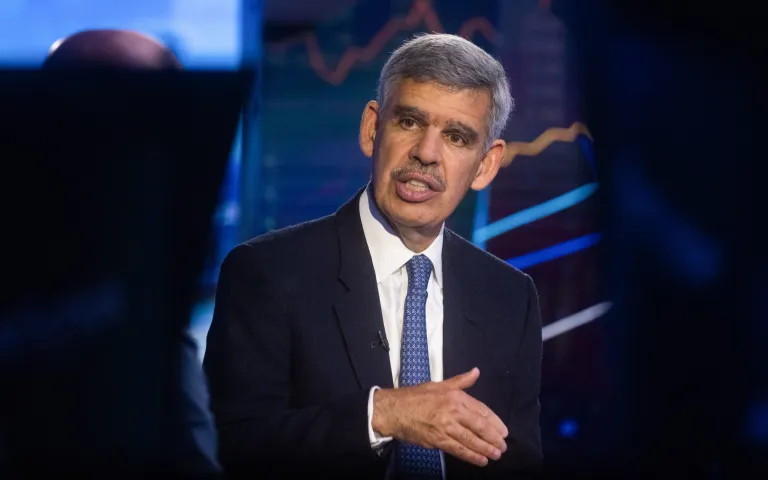
Leading economist Mohamed El-Erian has warned that the ongoing conflict involving Iran could push the global economy toward stagflation if the crisis continues to escalate. The warning comes as financial markets react to rising geopolitical tensions and growing uncertainty about energy supplies.
El-Erian said the global stagflation risk will depend largely on how long the conflict lasts and whether it spreads across the Middle East. The longer the confrontation continues, the greater the likelihood that energy markets will tighten, inflation will accelerate, and economic growth will weaken.
“The more it spreads, the more stagflationary it is for the global economy,” El-Erian said during an interview with CNBC. He serves as chief economic adviser at Allianz and is widely regarded as one of the most influential voices in global macroeconomics.
Global markets reacted quickly to the military escalation. The S&P 500 dropped more than 1.5 percent following reports of U.S. and Israeli strikes on Iranian targets. Major stock indices in London, Hong Kong, and Tokyo also declined as investors moved to reduce risk exposure.
Why the Strait of Hormuz matters to the world economy
A key concern among economists and energy analysts is the potential disruption of shipping through the Strait of Hormuz. The narrow waterway connects oil and gas producers in the Persian Gulf to global markets and is one of the most critical energy transit routes in the world.
Approximately one fifth of globally traded oil and natural gas passes through the strait. Any disruption, whether from direct military action or commercial vessels avoiding the region due to security concerns, could quickly tighten global energy supply.
Energy prices rose in the immediate aftermath of the attacks, reflecting fears that the conflict could interrupt production or shipping routes. Maritime insurers have already begun canceling coverage for vessels operating in the area after missile activity was reported across parts of the Gulf.
Former White House energy adviser Bob McNally warned that a prolonged closure of the Strait of Hormuz could have severe economic consequences. According to McNally, a sustained disruption would likely trigger a global recession as countries scramble to secure alternative energy sources while prices surge.
Inflation pressures could return quickly
Rising oil and gas prices would feed directly into consumer inflation around the world, increasing transportation costs, manufacturing expenses, and electricity prices. Economists say that combination could revive inflation just as many central banks are struggling to bring price growth under control.
El-Erian noted that the economic consequences could vary depending on the duration of the conflict. A short and contained military episode might cause only temporary volatility in energy markets and inflation readings.
However, a prolonged confrontation involving multiple countries could fuel inflation, disrupt supply chains, and slow economic growth simultaneously, a combination that defines stagflation.
The global stagflation risk becomes particularly acute when supply shocks coincide with limited monetary policy options. Central banks typically respond to economic slowdowns by lowering interest rates, but doing so while inflation remains elevated is far more difficult.
The Federal Reserve faces limited policy flexibility
The United States may be especially vulnerable to this policy dilemma. Inflation remains above the Federal Reserve’s long term target, which limits how aggressively policymakers can cut interest rates to support economic growth.
Recent data shows inflation in the United States running at about 2.4 percent, still above the Fed’s preferred two percent level. At the same time, economic momentum has slowed. Gross domestic product growth weakened late last year, and the labor market has cooled significantly.
According to Labor Department figures, employers added roughly 181,000 jobs across 2025, marking the slowest annual job growth since the pandemic period.
Former Treasury Secretary Janet Yellen also highlighted the policy challenge during remarks at an S&P Global conference. Persistent inflation, she said, makes aggressive interest rate cuts unlikely even if geopolitical tensions worsen.
“I think the recent Iran situation puts the Fed even more on hold,” Yellen said. “More reluctant to cut rates than they were before this happened.”
A resilient economy faces a new test
El-Erian described the strikes against Iran as another major shock confronting a global economy that has already navigated years of turbulence. The world avoided a widely predicted recession earlier in the decade, but geopolitical instability continues to test that resilience.
U.S. President Donald Trump said the military campaign against Iran could last four to five weeks, although he indicated the operation could continue longer if necessary.
For investors and policymakers alike, the central question is whether the global economy can withstand another prolonged disruption without sliding into a new cycle of inflation and stalled growth.
If the conflict expands or persists, El-Erian warned, the cumulative impact of energy shocks, market volatility, and supply disruptions could push the world closer to stagflation once again.