President Donald Trump has made clear that he does not want home prices to fall, even as affordability remains one of the most pressing economic issues for American households. The stance, which prioritizes protecting existing homeowners over expanding supply, could strengthen his political standing with older voters ahead of the 2026 midterm elections. It also risks fueling a deeper generational divide over access to homeownership.
Trump’s approach runs counter to recommendations from economists, housing advocates, and many local officials who argue that the U.S. needs significantly more construction to ease high prices. Instead, the president has framed rising home values as a sign of economic success and a safeguard for families who already own property.
Speaking to Cabinet members in late January, Trump said he wanted housing values to rise for homeowners and warned that making homes too affordable could erode those gains. The message reflects a calculation that resonates with older Americans, many of whom purchased homes decades ago and have benefited from years of appreciation.
Why protecting home values appeals to older voters
Homeownership is strongly correlated with Trump’s electoral base. In the 2024 election, more than four out of five of his voters owned their homes, according to voter data. Many either hold low fixed-rate mortgages or own their homes outright, reducing their sensitivity to current mortgage rates and high prices.
Older voters also turn out more consistently in midterm elections, giving them outsized influence. From a political perspective, maintaining strong housing values helps preserve household wealth for baby boomers who increasingly rely on home equity as a financial backstop in retirement.
Yet analysts warn that this strategy may come at a cost. Younger voters, including many under 40 who supported Trump in 2024, are far more likely to be renters or first-time buyers struggling with affordability. Polling shows housing costs rank among their top concerns, and frustration over limited supply is growing.
Younger buyers face a tightening market
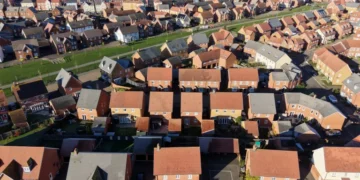
Across much of the country, limited inventory continues to push prices higher. Real estate agents report bidding wars in suburban markets, while would-be buyers face competition from investors and existing homeowners trading up.
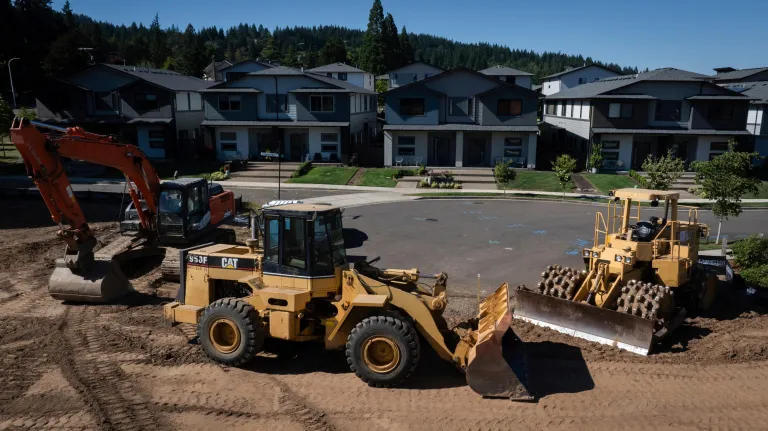
New construction has slowed rather than accelerated. Federal data show permits for single-family homes have declined over the past year, reducing the flow of new listings. Industry professionals say this shortage leaves many qualified buyers sidelined, even when mortgage incentives are available through builders’ preferred lenders.
For younger households, the challenge extends beyond buying a first home. Rising prices relative to income make it harder to save for down payments and delay traditional wealth-building milestones. The result is a widening gap between those who already own property and those who do not.
A shift from campaign promises to governing reality
During the 2024 campaign, Trump endorsed several supply-friendly ideas, including regulatory relief for builders, tax incentives for buyers, and expanded development on federal land. He also argued that stricter immigration enforcement would free up housing stock.
In office, however, the emphasis has shifted. Trump has focused more on pressuring the Federal Reserve to lower interest rates, arguing that cheaper borrowing would make mortgages more affordable. Critics counter that rate cuts could stoke inflation and further inflate home prices.
The administration has also directed Fannie Mae and Freddie Mac to purchase large volumes of mortgage-backed securities in an effort to ease borrowing costs. At the same time, Trump has expressed support for restricting large financial institutions from buying single-family homes, a move popular with many voters but unlikely to materially increase supply.
The risk of a generational standoff
Economists caution that prioritizing high prices without addressing supply could intensify long-term affordability challenges. Home prices have risen faster than incomes for years, turning primary residences into the dominant financial asset for many families. That dynamic can leave households asset-rich but cash-strapped.
If economic growth accelerates, housing demand could rise further, pushing prices even higher. Analysts at the American Enterprise Institute estimate that single-family construction would need to increase dramatically over several years just to stabilize price growth.
Politically, the risk for Trump is that younger voters may view his housing stance as favoring established wealth over opportunity. While protecting homeowners may secure support among baby boomers, failing to address affordability could dampen turnout among younger Americans whose participation proved pivotal in the last election.
As the midterms approach, housing policy is shaping up to be more than an economic issue. It is becoming a test of whether the administration can balance the interests of an aging homeowner class with the aspirations of a generation still trying to buy its first home.