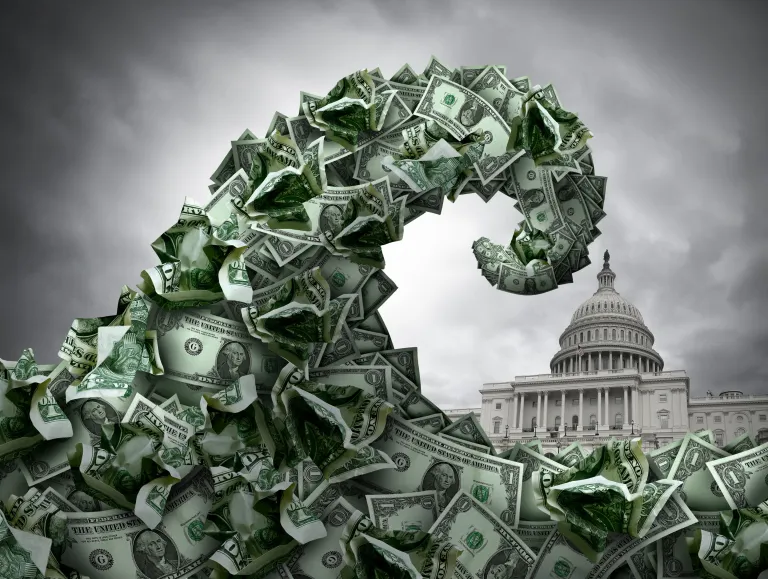
For years, America’s expanding deficits and mounting debt felt like an abstract concern, troubling economists more than voters. That has changed. Rising U.S. debt interest costs are now becoming one of the most visible and unsettling pressures on the federal budget, and their pace is accelerating faster than policymakers anticipated.
Public concern is already high. A 2025 survey by the nonpartisan Peter G. Peterson Foundation found that more than three-quarters of voters believe addressing federal borrowing should be a top priority for Congress and the White House. That anxiety has only intensified as interest payments, once a secondary budget item, move rapidly toward the center of fiscal debates.
From Background Expense to Budget Heavyweight
In fiscal year 2019, net interest on the national debt totaled $375 billion, about 1.7 percent of gross domestic product. By fiscal year 2025, which ended in September, that figure had surged to $952 billion. The increase of more than 150 percent far outpaced growth in major programs such as Medicare, Medicaid, and defense.
Interest now ranks as the federal government’s third-largest expense, trailing only Social Security and Medicare. It nearly matched Medicare spending in 2025 and consumed 3.2 percent of national income, almost double its pre-pandemic share. Put differently, interest payments have risen from less than one dollar out of every ten federal spending dollars to roughly one out of every six and a half.
The trend is intensifying. During the first quarter of fiscal year 2026, interest costs reached $179 billion, exceeding Medicare and defense spending for that period and ranking second only to Social Security.
Why Interest Is Rising So Fast
The surge in U.S. debt interest costs stems from a widening primary deficit, the gap between government revenues and spending before interest is counted. As that deficit grows, the Treasury must borrow more, increasing the total debt on which interest is owed.
Higher borrowing costs compound the problem. Since 2019, the average interest rate on federal debt has climbed from roughly 2.5 percent to about 3.35 percent. While the government has leaned heavily on short-term borrowing to keep rates down, refinancing that debt into longer-term bonds would likely increase interest expenses further.
Over the past six years, total federal deficits expanded from just under $1 trillion to $1.8 trillion. Interest alone added more than $570 billion to that increase, accounting for roughly 70 percent of the deterioration.
A Growing Threat to Long-Term Priorities
According to projections from the Congressional Budget Office, interest payments will continue to consume a larger share of national income, reaching about 4 percent by 2034. At that point, annual interest costs could approach $1.6 trillion, narrowly surpassing Medicare to become the second-largest federal expense.
That would mean roughly one in every four dollars collected from individual income taxes would go toward servicing existing debt rather than funding programs or investments. Even higher tariff revenues introduced under President Donald Trump have failed to offset the growth. In 2025, increased tariff income was largely absorbed by rising interest costs within the same year.
The Political Reckoning Ahead
Interest payments provide no direct public services, yet they increasingly crowd out spending on healthcare, defense, and future benefits. The expanding burden reflects decades of spending choices and revenue decisions that are now colliding with higher rates and larger debt loads.
If voters are searching for a tangible sign of fiscal imbalance, interest costs may be it. Once a technical line item, they are quickly becoming one of the most powerful symbols of the nation’s long-term budget challenge.