
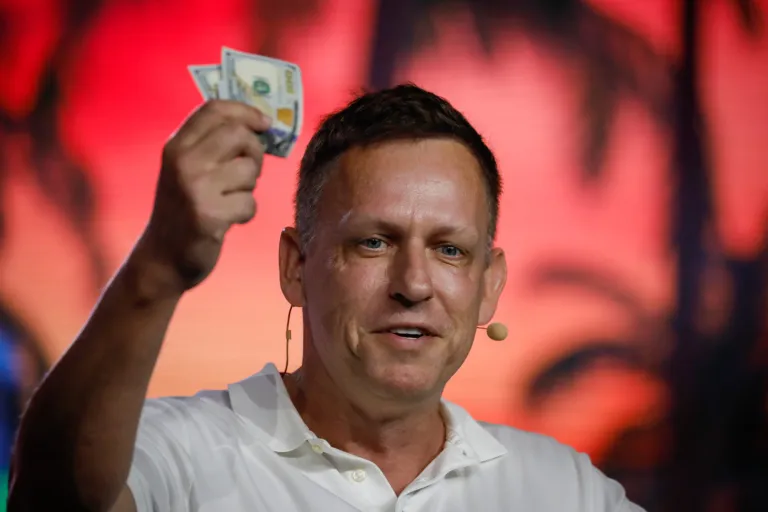
Venture capitalist Peter Thiel has stepped back into California politics with his largest disclosed political donation in several years, committing $3 million to a business-led campaign aimed at defeating the proposed California billionaire wealth tax. The contribution places Thiel among the earliest major financiers opposing a ballot initiative that could reshape how extreme wealth is taxed in the state.
The donation, made in late December, went to the California Business Roundtable, a powerful Sacramento-based advocacy group representing major employers and corporate interests. While the funds are not formally restricted to a single issue, the organization is expected to play a central role in organizing opposition to the 2026 Billionaire Tax Act if it advances to the ballot.
Why Thiel’s $3 Million Check Matters
The contribution marks Thiel’s largest known political gift since the 2022 midterm elections, when he spent tens of millions backing conservative candidates nationwide. This time, the focus is squarely on California policy. The Roundtable has publicly acknowledged that it is assembling a broad coalition of business leaders and high-net-worth donors to counter the proposed tax, which it views as harmful to investment and long-term economic growth.
For opponents, Thiel’s donation serves as an early signal that resistance will be well funded. Political strategists following the issue expect spending on both sides to climb rapidly if the measure qualifies for the November 2026 ballot, potentially making it one of the most expensive economic policy fights in the state’s recent history.
Inside the California Billionaire Wealth Tax
The California billionaire wealth tax would impose a one-time 5 percent levy on residents with net worth above $1 billion. Unlike income taxes, the proposal targets accumulated assets, including stocks, bonds, private business holdings, art, collectibles, and intellectual property. Certain categories, such as primary real estate holdings and some retirement accounts, would be excluded.
Eligibility would be based on residency status as of January 1, 2026, with asset values assessed at the end of that year. Payments would begin in 2027, with an option to spread the obligation over five years. Deferrals would carry an additional annual surcharge, increasing the effective cost for those who choose not to pay upfront.
Supporters argue the tax would generate significant public revenue from the state’s wealthiest residents. Critics counter that valuation disputes, legal challenges, and behavioral responses could limit its effectiveness while creating uncertainty for investors and founders.
Wealth, Mobility, and the Exit Question
Reaction among California’s ultra-wealthy has been swift. Some founders and investors have openly discussed relocating to lower-tax states, while others are reassessing their long-term commitments to California. Business groups warn that even the prospect of a wealth tax could accelerate departures and weaken the innovation ecosystem that has long defined Silicon Valley.
Thiel, who has previously purchased property in Florida, remains deeply connected to the technology sector through his investments and board roles, including his co-founding role at Palantir. His decision to fund opposition suggests a strategic choice to influence policy rather than disengage from the state altogether.
Other prominent investors have also criticized the proposal publicly, framing it as a risk to entrepreneurship and capital formation rather than a targeted revenue measure.
An Unusual Alignment With the Governor
Opposition to the tax has created rare political overlap. Democratic Governor Gavin Newsom has spoken out against the proposal, calling it poor policy and warning that it undermines California’s reputation among global investors. His stance places him, at least on this issue, alongside billionaire donors and business organizations typically at odds with Democratic leadership.
The campaign remains in its early phase. Proponents must still gather hundreds of thousands of valid signatures to qualify the initiative for the ballot. If they succeed, the coming months are expected to bring an intense, high-dollar battle over taxation, mobility, and the future of wealth in California, with Thiel’s $3 million donation marking the opening move.