Why did interest payments rise so sharply?
Treasury interest costs surged in the final three months of 2025, underscoring how the size of the national debt continues to shape the federal budget. According to the Congressional Budget Office, the Treasury paid $276 billion in net interest between October and December, an average of roughly $92 billion per month. That total was about $30 billion higher than during the same period a year earlier.
The increase reflects both the expanding stock of federal debt and the interest rates attached to it. The CBO said interest payments rose primarily because the value of outstanding debt was larger at the end of 2025, which coincided with the opening quarter of the 2026 fiscal year. Higher long term rates and elevated inflation also contributed, while declines in short term rates provided only partial relief.
For the full fiscal year that ended in September 2025, Treasury data shows the federal government spent $1.22 trillion on interest alone. That figure now rivals or exceeds spending on many major federal programs, highlighting how Treasury interest costs are becoming a central constraint on fiscal policy.
What relief, if any, lies ahead in 2026?
Looking ahead, there are few signs of meaningful near term relief. The national debt stands at roughly $38.4 trillion, and analysts broadly expect borrowing costs to remain relatively high even as the Federal Reserve edges toward easier policy.
Market based expectations suggest limited movement at the next Federal Open Market Committee meeting. Betting markets such as Polymarket indicate a strong likelihood that rates will remain unchanged, with only a small chance of a modest quarter point cut. Data from CME Group reflects similar assumptions among traders.
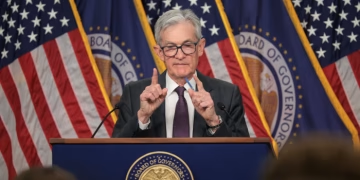
The Federal Reserve has already lowered short term rates from recent peaks, but officials have signaled caution as inflation remains above target. That stance limits how quickly Treasury interest costs can decline, even if economic growth cools.
Can inflation ease the pressure?
There is some potential relief on the inflation front. In its recent View of the Economy report, the CBO projected a gradual slowdown in price growth during 2026. Core personal consumption expenditures inflation is expected to ease from about 3.2 percent in the first quarter to 2.5 percent by the end of the year.
Lower inflation could reduce future borrowing costs and slow the growth of interest expenses, but the effect is likely to be incremental. With so much debt already outstanding, even small changes in rates can translate into tens of billions of dollars in annual interest payments.
Tariffs, courts, and political risk
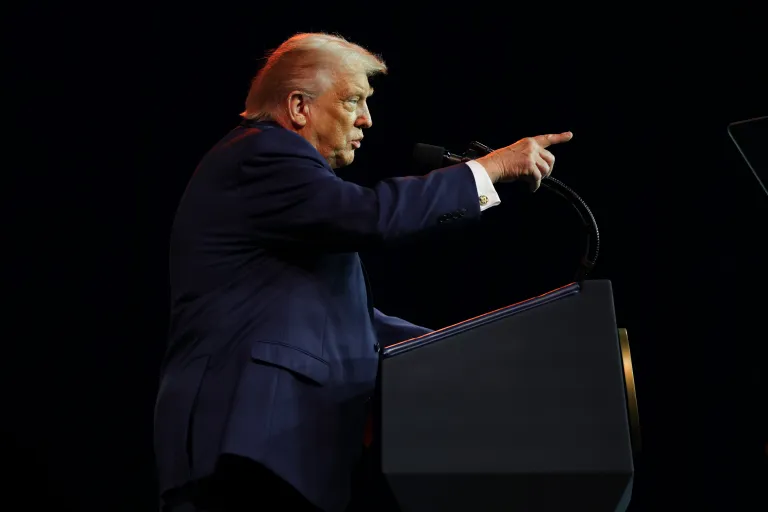
Fiscal policy choices under President Donald Trump add another layer of uncertainty. Trump has argued that tariff revenue could help offset or even reduce the national debt. More recently, however, the administration has discussed directing some of that revenue toward cash payments to households.
The legal footing of those tariffs is also in question. The Supreme Court of the United States is expected to rule soon on their legality. Desmond Lachman of the American Enterprise Institute warned that overturning the tariffs would represent a major blow to the budget, removing a significant source of revenue at a time when Treasury interest costs are already elevated.
A deficit moving, cautiously, in the right direction
Despite these pressures, near term deficit figures show modest improvement. The CBO reported that the federal deficit totaled $601 billion in the first quarter of fiscal year 2026, about $110 billion less than during the same period a year earlier. Revenues rose by $141 billion, while outlays increased by $31 billion, largely due to higher interest costs.
Some spending declines helped offset those costs. Outlays from the Environmental Protection Agency fell sharply after a one time clean energy grant program the prior year, and disaster related spending at the Department of Homeland Security also declined. The largest boost came from customs duties, which were more than four times higher than a year earlier, increasing by roughly $70 billion.
The broader picture, however, remains clear. Treasury interest costs are no longer a background line item. They are now a defining feature of the federal budget, shaping policy choices and narrowing the margin for fiscal flexibility in the years ahead.