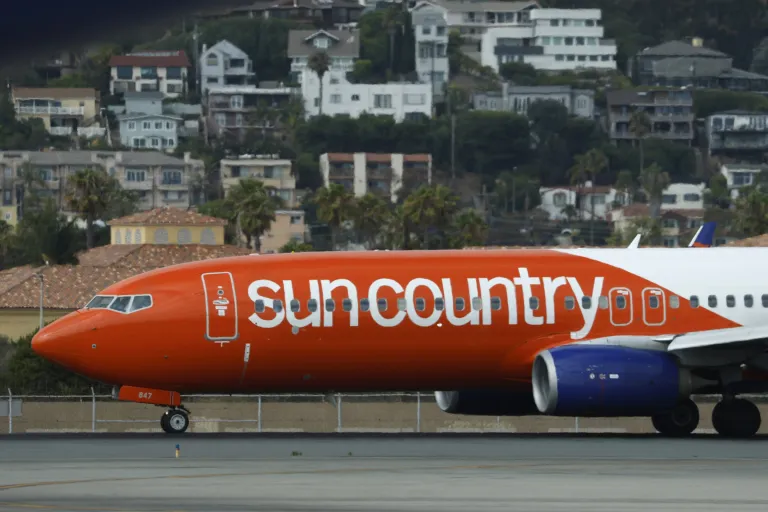
Allegiant Travel Co. has agreed to acquire Sun Country Airlines Holdings Inc. in a cash-and-stock transaction valued at $1.5 billion, including debt, a move that signals continued consolidation in the US leisure travel market. The companies announced the agreement in a joint statement on Sunday, outlining plans to combine two carriers that focus heavily on price-sensitive vacation travelers.
Under the terms of the deal, Sun Country shareholders will receive 0.1557 shares of Allegiant common stock and $4.10 in cash for each Sun Country share. The offer represents a premium of nearly 20 percent compared with Sun Country’s closing price on Friday. The transaction positions Allegiant to acquire Sun Country while maintaining a balance between cash consideration and equity participation for existing shareholders.
A strategic bet on scale and destinations
The combined airline is expected to operate more than 650 routes, including 18 international destinations across Mexico, Canada, the Caribbean, and Central America. Executives from both companies emphasized that their route networks are largely complementary, with limited overlap and significant opportunities to expand service to underserved leisure markets.
Allegiant Travel Co. has built its business around connecting smaller US cities with popular vacation destinations, often flying routes that face little direct competition. Sun Country Airlines Holdings Inc., headquartered in Minnesota, has historically focused on a mix of leisure travel, charter services, and cargo operations, including a notable partnership in air freight.
“Together, our complementary networks will expand our reach to more vacation destinations including international locations,” said Allegiant Chief Executive Officer Gregory C. Anderson in a prepared statement. He added that the combined company would be better positioned to deploy aircraft efficiently while maintaining a low-cost operating structure.
What the deal means for passengers
For travelers, the merger could translate into a broader menu of nonstop options to vacation destinations, particularly from mid-sized cities that often lack direct service. Both airlines operate Boeing 737 aircraft, which may simplify fleet integration and maintenance over time.
Industry analysts note that while mergers can eventually lead to cost savings and route expansion, they also raise questions about pricing and competition. Allegiant and Sun Country both compete in the ultra low-cost segment, where fares are typically low but ancillary fees make up a large portion of revenue. Regulators are likely to examine whether the combination reduces consumer choice on specific routes.
Still, the companies argue that their limited route overlap minimizes antitrust concerns. The majority of their flights originate from different hubs and serve distinct regional markets, a factor that could ease regulatory review.
Financial rationale and market reaction
From a financial perspective, the deal allows Allegiant to acquire Sun Country at a time when airline valuations remain sensitive to fuel costs, labor agreements, and demand trends. By including Sun Country’s debt in the $1.5 billion valuation, Allegiant signals confidence in its ability to manage leverage while investing in growth.
Sun Country’s shareholders gain immediate liquidity through the cash component, along with potential upside through Allegiant stock if the combined company delivers on its expansion strategy. The premium offered suggests Allegiant was motivated to secure the deal amid ongoing interest in airline consolidation.
A broader trend in US aviation
The agreement fits into a broader pattern of mergers and acquisitions across the aviation sector, as carriers seek scale to offset rising costs and volatile demand. While mega-mergers among the largest airlines have drawn intense regulatory scrutiny in recent years, combinations among smaller carriers have sometimes faced fewer obstacles, particularly when they emphasize network complementarity.
If approved, the transaction would further solidify Allegiant’s position as a leading leisure-focused airline in North America. For Sun Country, the deal offers access to greater scale and capital, potentially supporting new routes and aircraft utilization.
The companies did not disclose a specific timeline for closing but said the transaction is subject to customary regulatory approvals and shareholder consent. Until then, both airlines will continue to operate independently.