
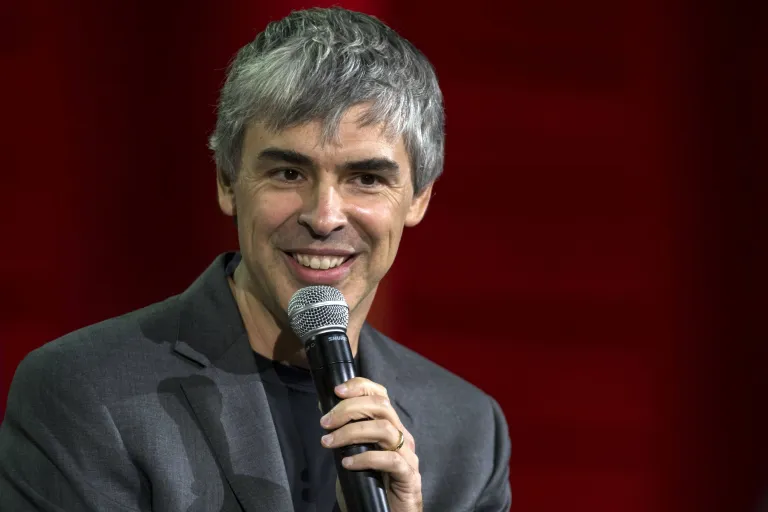
Larry Page has joined the growing list of technology billionaires shifting their personal and financial footprint away from California. The Google co-founder has spent roughly $173 million acquiring two neighboring waterfront estates in Miami’s Coconut Grove, a move that closely mirrors the relocation strategy previously used by Jeff Bezos.
The Larry Page Miami compound purchase places one of the world’s wealthiest individuals squarely in South Florida, a region that has become increasingly attractive to ultra-high-net-worth residents seeking tax efficiency, privacy, and proximity to global financial networks. The acquisitions also signal how seriously billionaire founders are responding to proposed tax changes in traditional tech hubs.
A High-Value Entry Into Coconut Grove
According to reporting from The Wall Street Journal, Page acquired one waterfront mansion for approximately $101.5 million and a second neighboring estate for about $71.9 million in an off-market transaction. Together, the deals total roughly $173.4 million.
One of the properties features 13 bedrooms, more than 15 bathrooms, and direct water access, characteristics that place it among the most exclusive private residences in Miami. The second home, previously owned by heiress Sloan Lindemann Barnett and her husband, real estate executive Roger Barnett, nearly doubled in value in under five years.
Coconut Grove has long been favored by international executives and financiers for its low-profile luxury and limited inventory of deep-water properties. Local real estate professionals say Page’s arrival underscores a broader influx of wealthy Californians purchasing trophy assets in South Florida, often with long-term residency plans in mind.
Cutting Financial Ties With California
The real estate purchases are part of a broader restructuring by Page as California lawmakers debate aggressive wealth tax proposals aimed at residents worth more than $1 billion. Regulatory filings show Page has moved key investment entities and his family office out of California, reincorporating several structures in Delaware and listing new operational addresses in Florida.
The The New York Times has previously reported that Page was considering Florida specifically because of a proposed ballot initiative that would impose an annual tax on the worldwide assets of billionaires domiciled in California. Analysts have estimated that such a tax could cost Page more than $10 billion over time if enacted and enforced.
While supporters argue the tax would help fund essential public services, critics warn it could accelerate the departure of capital, founders, and investment activity from the state. Page’s move now places him among the most prominent figures to act decisively ahead of any policy change.
Following the Bezos Blueprint
The similarities between Page’s strategy and Bezos’ earlier relocation are difficult to ignore. Bezos announced his move to Miami in 2023 and subsequently assembled a compound in Indian Creek Village, often referred to as the “Billionaire Bunker,” spending an estimated $237 million across multiple properties.
In Bezos’ case, analysts estimated the move could save him close to $1 billion in state taxes. Florida’s lack of state income tax, combined with favorable treatment of capital and estates, has made it an increasingly popular destination for centibillionaires managing complex portfolios.
The Larry Page Miami compound reflects the same logic. For individuals with net worths measured in the hundreds of billions, relocating before new tax regimes take effect can translate into long-term savings measured in the tens of billions.
Miami’s Expanding Role in Tech and Finance
Page’s arrival further cements Miami’s evolution from lifestyle destination to secondary power center for technology and finance. Since the early 2020s, the city has attracted hedge funds, venture capital firms, crypto companies, and senior executives who once clustered in Silicon Valley or New York.
Not all tech leaders are leaving California. Nvidia CEO Jensen Huang has publicly stated he plans to remain despite wealth tax discussions. Still, Page’s decision reinforces a pattern among the ultra-wealthy who have the flexibility to relocate assets and residency quickly.
For policymakers, the implications are significant. As more founders follow a Bezos-style blueprint, states face a delicate balance between expanding tax bases and retaining the individuals who generate outsized economic activity. For billionaires like Page, the message is increasingly clear. Geography has become a strategic financial decision, not just a personal one.