A search for replacement revenue after the court decision
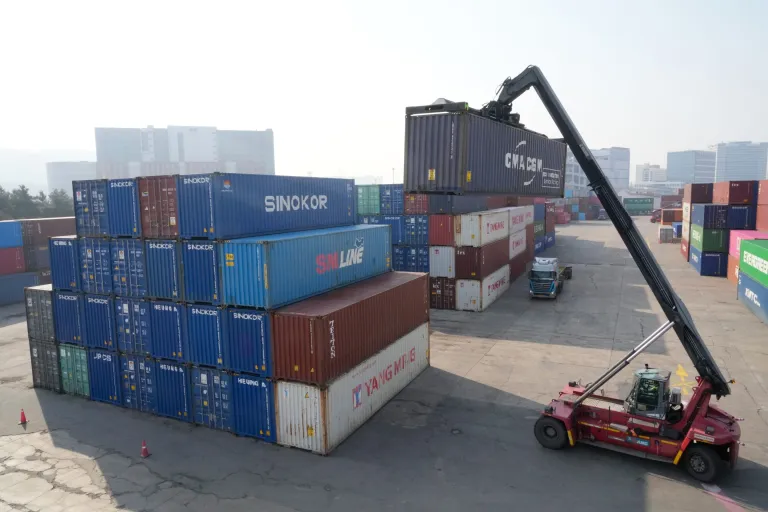
The Trump administration is moving to rebuild a major stream of federal income after a Supreme Court ruling eliminated a large portion of its tariff authority, leaving a projected $1.6 trillion shortfall. The effort to address the Trump tariffs revenue gap now centers on new trade investigations that could lead to a fresh round of import duties.
Earlier this year, the court ruled that the administration could not rely on an emergency statute to impose sweeping tariffs on imports. That decision removed a large portion of the revenue the White House had expected to collect over the next decade. Officials are now turning to more traditional trade law tools, though the process is slower and more open to legal challenges.
Economists and policy analysts say the administration may eventually restore similar tariff levels on paper. However, the new process gives businesses and foreign governments greater opportunity to contest the measures, potentially delaying or reducing their financial impact.
Why Section 301 is now at the center of U.S. trade policy
U.S. Trade Representative Jamieson Greer announced that the administration will open investigations into 16 major economies, including the European Union, China, Japan, and South Korea. The probe will examine whether government subsidies in those regions have created excessive manufacturing capacity that disadvantages American industry.
A separate investigation will evaluate whether countries that fail to block goods produced with forced labor are engaging in unfair trade practices that harm the United States. That review includes major trading partners such as Mexico, Canada, Australia, Brazil, the European Union, and China.
Both inquiries rely on Section 301 of the Trade Act of 1974, a legal mechanism that allows the United States to impose tariffs in response to unfair trade practices. Unlike emergency tariff powers, Section 301 requires public hearings, consultations with foreign governments, and opportunities for domestic industries to comment.
The first hearing in the excess capacity investigation is scheduled for May 5. A separate hearing addressing forced labor concerns is planned for April 28.
Temporary tariffs buy time for a longer strategy
Immediately after the court decision, President Donald Trump imposed a temporary 10 percent tariff on most imports using a separate legal authority. The measure can only remain in place for 150 days. Trump has indicated he could raise that rate to the maximum allowed level of 15 percent, though that step has not yet occurred.
The administration hopes the Section 301 investigations will conclude before the temporary tariffs expire. However, the policy faces additional obstacles. More than two dozen U.S. states have already filed legal challenges against the new duties, adding further uncertainty about how much revenue they may ultimately generate.
Policy experts say the broader investigations suggest the administration is attempting to recreate a wide-ranging tariff framework similar to the one invalidated by the court.
According to the Tax Foundation, the first investigation could affect about 70 percent of U.S. imports, while the second may apply to nearly all imported goods.
Tariffs as fiscal policy, a break from past administrations
The administration’s approach reflects a significant shift in how tariffs are being used in U.S. policy. Historically, tariffs have been applied selectively to protect particular industries or respond to specific trade disputes.
In contrast, the Trump administration has increasingly treated tariffs as a major revenue source for the federal government. The strategy is tied closely to a series of tax cuts approved in recent legislation.
The Congressional Budget Office estimates that those tax cuts could add roughly $4.7 trillion to the national debt over the next decade. Prior to the court ruling, projected tariff revenue was expected to offset about $3 trillion of that cost.
With the removal of emergency tariff authority, the government lost an estimated $1.6 trillion in anticipated revenue over the same period.
Some tariffs remain in effect, including duties on imports from China and Canada stemming from earlier Section 301 investigations, as well as tariffs on certain products such as steel, automobiles, and lumber. Combined with the temporary import duty currently in place, these measures are projected to generate about $668 billion over the next ten years.
Still, analysts note that rebuilding the full Trump tariffs revenue gap would require a complex mix of investigations, new duties, and legal victories.
Many economists argue that if tariffs are intended primarily as a revenue source, Congress may ultimately need to legislate a broader tariff framework rather than relying on trade enforcement laws designed for different purposes.