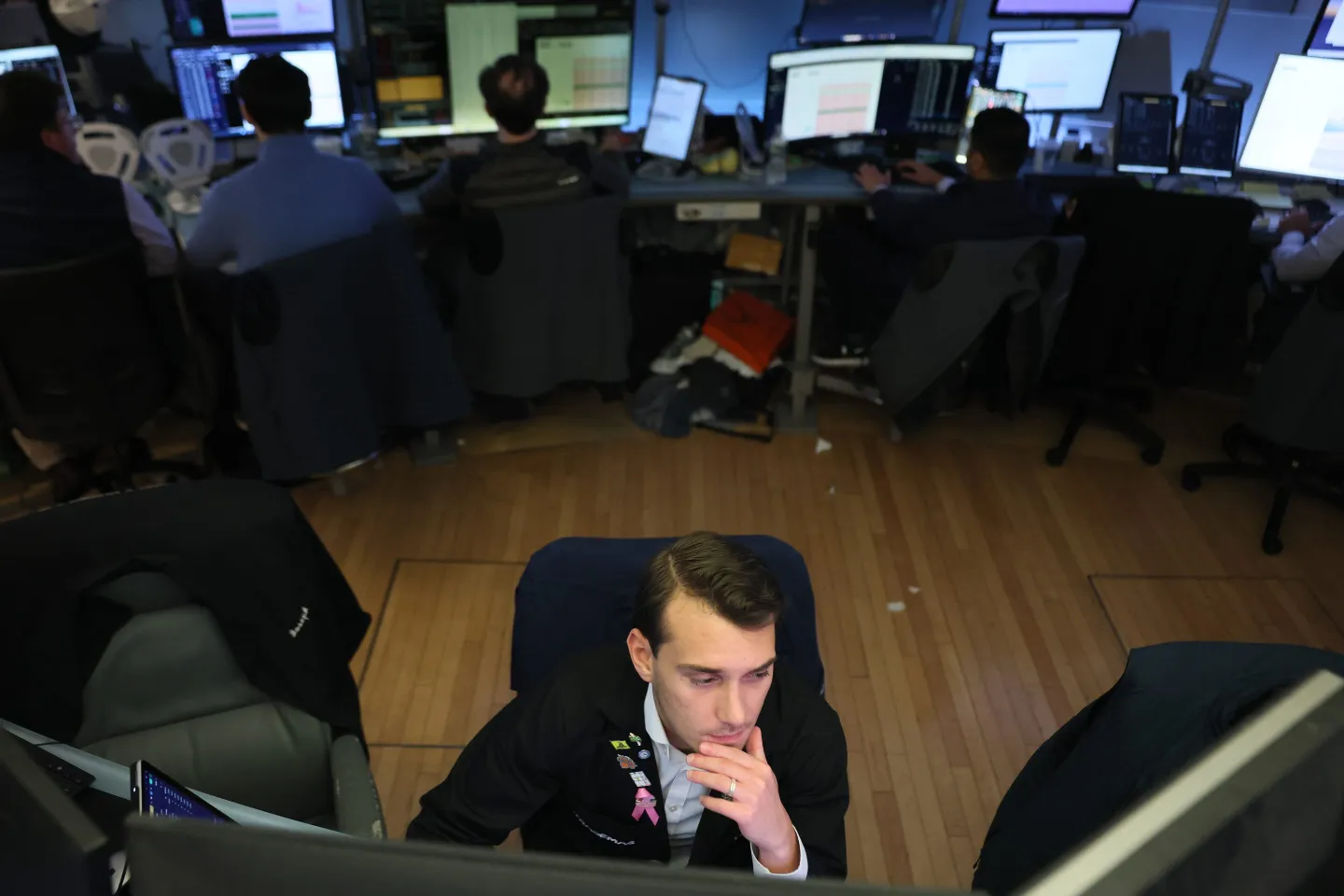
An Optimist Among Skeptics
Even as Wall Street grapples with mixed signals – slowing growth, persistent inflation, and political uncertainty – one top economist remains decidedly bullish. Ethan Harris, a longtime global research analyst and former head of U.S. economics at Bank of America, says the U.S. is “on the cusp of a new boom”, driven by productivity gains, capital investment, and resilient consumer demand.
But not everyone is buying it.
“Markets remain choppy,” Harris admitted this week. “Investors are reacting to headlines, not the underlying fundamentals – and those fundamentals are still improving.”
The Case for a Coming Boom
Harris’s argument rests on three key trends he believes are still underappreciated:
-
Productivity revival – Recent data shows U.S. productivity growth averaging 2.3% over the past year, well above the pre-pandemic norm. Harris attributes the shift to AI-driven automation, supply-chain reinvestment, and corporate efficiency gains.
-
Capital spending surge – Despite higher borrowing costs, private fixed investment is up 6% year-over-year. Companies are still expanding data centers, reshoring manufacturing, and modernizing logistics networks.
-
Consumer strength – Household net worth remains near record highs, and unemployment is below 4%. “The average American isn’t retrenching,” Harris said. “They’re adjusting – but still spending.”
He believes these forces could drive GDP growth back above 3% in 2026, marking the start of what he calls “a quiet expansion cycle hiding in plain sight.”
Markets Say Otherwise
Yet in the short term, market sentiment paints a different story. Stocks have seesawed for weeks amid concerns about Federal Reserve policy, global trade tensions, and a still-elevated inflation outlook.
The S&P 500 has traded in a tight, volatile band since mid-September, while the CBOE Volatility Index (VIX) climbed to a six-month high.
“Markets are still in wait-and-see mode,” said Liz Ann Sonders, chief investment strategist at Charles Schwab. “The data is mixed, and investors are tired of false dawns.”
Tech shares, which once led every rally, are now under pressure amid fears of an AI valuation bubble. Energy and financials have outperformed, signaling a cautious shift toward value and defensiveness.
A Tale of Two Narratives
The divide between economic optimism and market caution reflects a deeper uncertainty about what “normal” looks like after years of stimulus, pandemic distortion, and policy experimentation.
“Investors have PTSD from the last few cycles,” said David Rosenberg, chief economist at Rosenberg Research. “Every time someone calls for a boom, something breaks – first supply chains, then inflation, then confidence.”
Still, the data gives the bulls ammunition. Retail sales, industrial production, and real income growth have all surprised to the upside in recent months. Corporate earnings, too, are holding up – with nearly 70% of S&P 500 companies beating estimates last quarter.
“This isn’t what a pre-recession economy looks like,” Harris said. “It’s what an early-cycle economy looks like.”
Choppy Waters for Investors
Even as economic fundamentals improve, investors remain wary of volatility. The 10-year Treasury yield hovers around 4.3%, its highest sustained level since 2007, keeping borrowing costs elevated and valuations stretched.
“Everyone’s waiting for confirmation – either the Fed cuts or inflation collapses,” said Sonders. “Until then, the chop continues.”
That cautious stance has left cash allocations unusually high. According to Bank of America’s global fund manager survey, average cash holdings remain above 4.8%, signaling that institutional investors are still hedging against downside risks.
Where Harris Sees the Turning Point
For Harris, the inflection point could come sooner than markets expect. He believes the first half of 2026 will mark a transition from “post-crisis adjustment” to “productivity-led growth.”
“AI isn’t hype anymore – it’s efficiency,” he said. “We’re starting to see it in logistics, finance, and healthcare. Those gains compound faster than people think.”
He also pointed to infrastructure investment from federal programs like the CHIPS Act and Inflation Reduction Act, which continue to stimulate regional economies and employment.
“Fiscal momentum hasn’t faded,” he noted. “It’s just quieter and more targeted.”
Skeptics Still Hold the Mic
Despite Harris’s confidence, most investors remain defensive – a stance reinforced by recent geopolitical tensions, uncertain trade policy, and concerns about consumer credit.
“There’s boom potential, yes,” said Rosenberg, “but the runway is crowded with policy turbulence.”
Others warn that the Fed’s path forward remains the single biggest swing factor. “If rate cuts come too late,” said Sonders, “the window for acceleration may close before it opens.”
The Bottom Line: Between Hope and Hesitation
For now, Harris’s optimism stands in contrast to the prevailing tone of market caution. But even the skeptics concede that resilience, not fragility, has defined the post-pandemic economy.
“Call it whatever you want – a soft landing, a rolling recovery, or a pre-boom,” said Sonders. “The truth is, the U.S. economy keeps surprising people.”
Harris’s final word to investors:
“Markets may be choppy, but progress rarely looks smooth in real time. The seeds of the next boom are already planted — they’re just being priced in too slowly.”